 Thomas Lucas
 Can you visit Keukenhof and the Dutch bulb fields in one day without spending most of it in a bus queue or arriving after the best flowers have faded? Yes, but the order matters. A traveller who books the first convenient date may see a beautiful park but miss the strongest field colours, while someone who chases the peak bloom can face heavy crowds, wet paths, and sold-out entry times.
This guide treats the trip as a planning problem: choose the right week, secure a timed arrival, use the correct transport connection, and set realistic expectations for the surrounding fields. Keukenhof is a managed flower park in Lisse. The bulb fields around it are working agricultural land. They are connected experiences, but they are not the same attraction.
The practical information below is travel guidance, and opening dates, prices, transport schedules, and local access rules can change.
Is Keukenhof worth planning an entire spring day around?
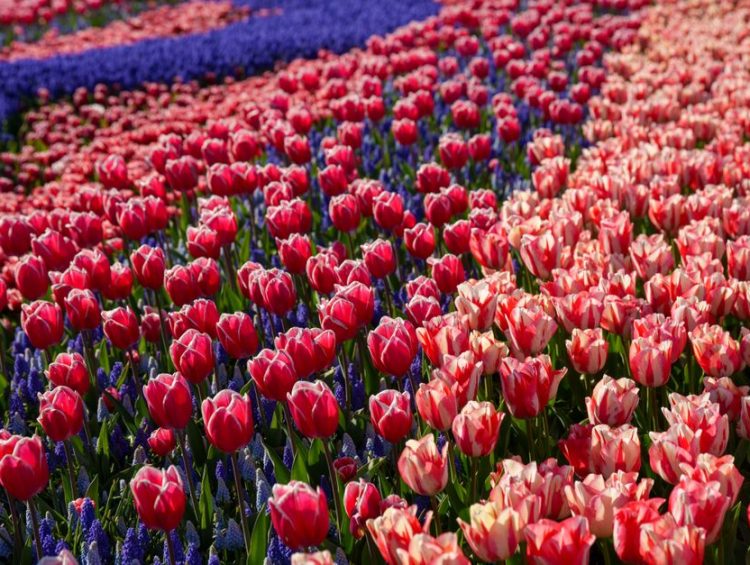
Yes, for a first visit, Keukenhof is the clear choice when you want reliable flower displays rather than a gamble on field conditions. The park plants about 7 million bulbs across 32 hectares, with roughly 15 kilometres of walking paths, indoor flower shows, landscaped gardens, mature trees, and facilities that make a long visit easier. The surrounding fields offer the wider landscape: long bands of colour, quiet roads, and the sense that the flowers are part of a working region rather than a single exhibition.
What Keukenhof gives you that the fields cannot
Keukenhof is designed for visitors. You can walk close to different varieties, compare tulip shapes and colours, use toilets and food outlets, leave smaller bags in lockers, and move indoors if rain arrives. The park also gives you a dependable visual experience even when the commercial fields have been cut, delayed, or planted with a less dramatic crop. For photographers, families, and anyone visiting the Netherlands only once, that reliability carries real value.
What the bulb fields give you instead
The fields are about scale, not concentration. From a public road or permitted cycling route, you may see rows stretching far beyond the frame of a phone camera. You will not receive the same curated succession of displays, and you should not assume every colourful field is open for walking. Farmers grow these bulbs for production. Follow signs, stay on public paths, and never step between rows for a photograph. My verdict is simple: buy the park visit if flowers are the main purpose of your day; add the fields if you want landscape and have at least two or three spare hours.
Which week has the best flowers and the fewest compromises?
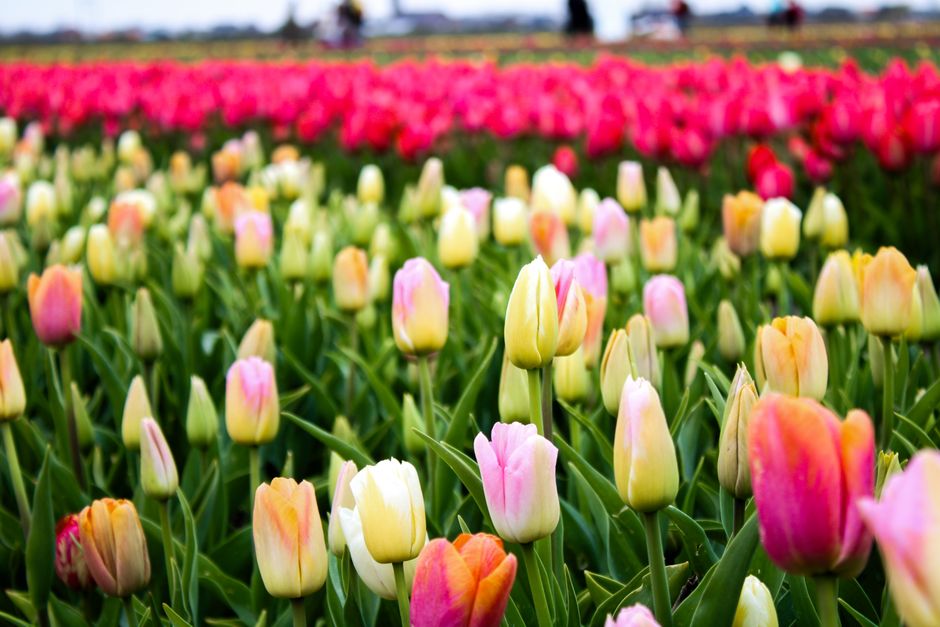
There is no single legally or scientifically fixed “peak bloom” date. Weather controls the sequence. A cold March can push tulips later; a warm April can bring a short, intense display and an earlier cut. Keukenhof’s 2026 season runs from 19 March through 10 May, with the park open daily from 8:00 a.m. to 7:00 p.m. and entrance closing before the park itself.
| Typical period | What you may see | Main tradeoff | Best choice for |
|---|---|---|---|
| 19 March–early April | Daffodils, crocuses, hyacinths, early tulips | Fewer visitors, but some late tulip beds may not be ready | Quiet walks and softer spring colour |
| Early–mid April | Mixed displays, strong hyacinth colour, many tulips beginning to open | Rising visitor numbers and changeable weather | Travellers who want variety |
| Mid–late April | Often the strongest tulip range, with mature displays in the park | Busier weekends and higher pressure on transport | First-time visitors focused on tulips |
| Late April–10 May | Late tulips and indoor shows; some outdoor beds may already be cut | Field colour becomes less predictable | Visitors who need a late-spring date |
Why the calendar matters less than the forecast
The table is a planning guide, not a promise. Check the official flower report close to your visit and keep one flexible day if your schedule allows. A bright weekday with a slightly earlier display can be more enjoyable than a perfect-looking Saturday forecast shared by thousands of other visitors. If the surrounding fields are your priority, ask locally about current conditions before setting out. Flower farms may change crops or cut blooms for bulb production without notice.
My strongest date recommendation
For most first-time visitors, choose a weekday in the second or third week of April and reserve an arrival slot between 8:00 and 9:00 a.m. That window gives you the best balance between mature displays, lower morning heat, and enough daylight for a short field ride afterward. If you cannot avoid a weekend, arrive at the earliest available slot and treat the field visit as optional rather than trying to force both attractions into a rigid timetable.
How should you travel from Amsterdam, Schiphol, or Leiden?
The easiest plan is to make Keukenhof the first stop, then decide how much energy and daylight remain for the bulb region. Lisse does not have a mainline railway station beside the park, so travellers usually combine a train with a direct seasonal bus, take a KeukenhofBus connection, drive, or join a guided excursion. The right choice depends less on price than on the number of transfers you can tolerate before an early timed entry.
From Amsterdam by train and bus
- Take an NS train from Amsterdam to Leiden. The published NS journey is about 38 minutes, with one direct train option and an e-ticket advertised from €12.00 one way.
- Continue from Leiden using the seasonal bus connection to Keukenhof. Check the departure point and service day before leaving; spring operations can use temporary stops and crowd-control arrangements.
- Arrive at the park early enough to absorb a queue, a toilet stop, and the walk from the bus area to the entrance.
This route is a strong choice for visitors staying near Amsterdam Centraal who dislike driving. It is less attractive if your ticket begins at 8:00 a.m. and your accommodation is far from the station. In that case, a direct seasonal bus from Amsterdam RAI or Schiphol may reduce transfers.
From Schiphol Airport
Schiphol is usually the most practical starting point for visitors landing in the morning, but do not schedule Keukenhof immediately after a long-haul flight. Baggage delays and passport queues can destroy a timed entry. Leave a wide margin or stay near the airport the previous night. Seasonal buses may be direct, but their frequency and boarding arrangements can change during busy weeks, so verify the same-day departure information before relying on a tight connection.
When driving is the better decision
Driving makes sense for a family carrying luggage, travellers staying in the countryside, or a group combining several villages. The 2026 parking token listed in official ticket material is €8, but parking capacity and road congestion still matter. A car does not give you permission to stop on a narrow farm road or pull onto a planted field. Use the designated car park, obey traffic signs, and leave enough time for the return journey. My transport verdict: use public transport from central Amsterdam, but choose a car only when it solves a real access problem.
What mistakes make a Keukenhof trip go wrong?
Most poor visits are caused by small planning errors rather than the park itself. The following questions address the failures I would resolve before booking.
Do you need a timed ticket?
Yes. Regular Keukenhof entry uses a selected date and arrival window, commonly in half-hour blocks. The slot controls when you enter, not how long you may stay. Missing it can create a serious problem during busy periods, so do not plan to arrive at the last possible minute. The official ticket shop is the safest place to confirm the current calendar and terms. Be cautious with websites that copy the Keukenhof name but use a different domain.
Should you buy the Keukenhof Lentepas for one visit?
No. The 2026 adult Lentepas is listed at €50, or €65 with parking, while the child pass for ages 4–17 is €17.50. That pass makes sense for a local resident or a traveller staying nearby who expects several visits across the season. For one day, a standard adult admission listed at €18.50 is the clear value. The same logic applies to parking: add the €8 car token only if you are actually driving.
When should you skip Keukenhof altogether?
Skip the park ticket if your real goal is a quiet rural ride, a long photography session, or a broad view of working farmland. Choose a public cycling route through the flower region instead, and accept that bloom conditions may be uneven. Skip a long field detour when rain, strong wind, or poor visibility would make cycling unpleasant. You can spend the afternoon in Leiden or Haarlem and still have a worthwhile spring day. The mistake is not choosing the “wrong” attraction; it is paying for one experience while hoping it will behave like another.