 Thomas Lucas
 You want the real Morocco. Not the Instagram version. Not the resort pool. You want the medina maze, the call to prayer echoing off ninth-century walls, the tannery smell that stays in your clothes for days. So you’re asking: Marrakech or Fes? The answer is not symmetrical. One city performs culture. The other one lives it.
This is not legal advice — consult a licensed travel professional for itinerary planning. But after spending extended time in both cities and talking to guides, artisans, and residents, the distinction is sharper than most travel blogs admit.
The Core Problem: What Do You Mean by ‘Culture’?
Most travelers use “culture” to mean four different things. You need to know which one you actually want before comparing cities.
- Living heritage — people still doing what they’ve done for centuries in the same place
- Monumental history — buildings, mosques, universities, palaces with dates attached
- Artisan craft — leather, ceramics, metalwork, textiles made by hand
- Performance culture — food, music, storytelling, street life
Marrakech wins the fourth category outright. Fes dominates the first three. If you want a city that feels like a living museum where the exhibits argue with you over the price of a rug, go to Fes. If you want a city that stages culture as spectacle — snake charmers, food stalls, rooftop sunset calls — Marrakech delivers that with professional polish.
Here’s the thing most guides won’t tell you: Marrakech’s medina is largely rebuilt and repurposed for tourism. That’s not a moral failing. It’s just a fact. Fes el-Bali (the old city) has roughly 9,000 streets and many families have lived in the same houses for generations. The difference matters.
Fes: Artisan Craft Without the Filter
Fes is where you go to watch a man hammer a copper tray the same way his grandfather did, using tools that look like they belong in a museum display. The craft is not a performance. It’s Tuesday.
The Tanneries: Chouara and Beyond
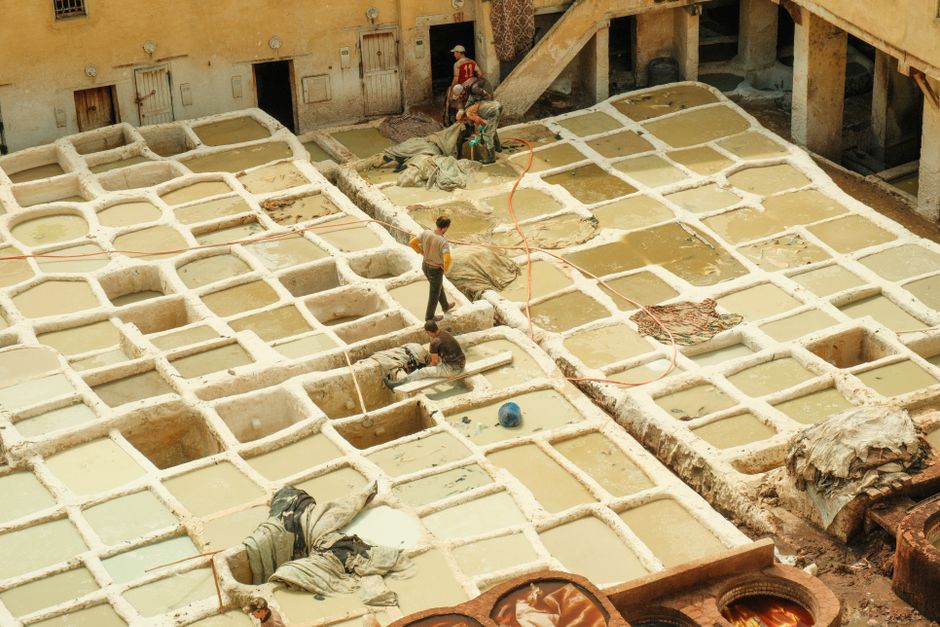
The Chouara Tannery in Fes is the oldest working tannery in the world, operating since at least the 11th century. You’ll smell it before you see it. The vats of pigeon droppings and cow urine used to soften hides are not a tourist installation. Workers stand waist-deep in dye pits. This is a functioning industrial site, not a heritage reenactment.
Marrakech has tanneries too, but they’re smaller, less accessible, and frankly less impressive. The Fes tanneries process hides for export and local use. You can buy a leather bag from the shop overlooking Chouara and reasonably believe it was made from leather processed below you.
Ceramics and Zellige: The Fes Style
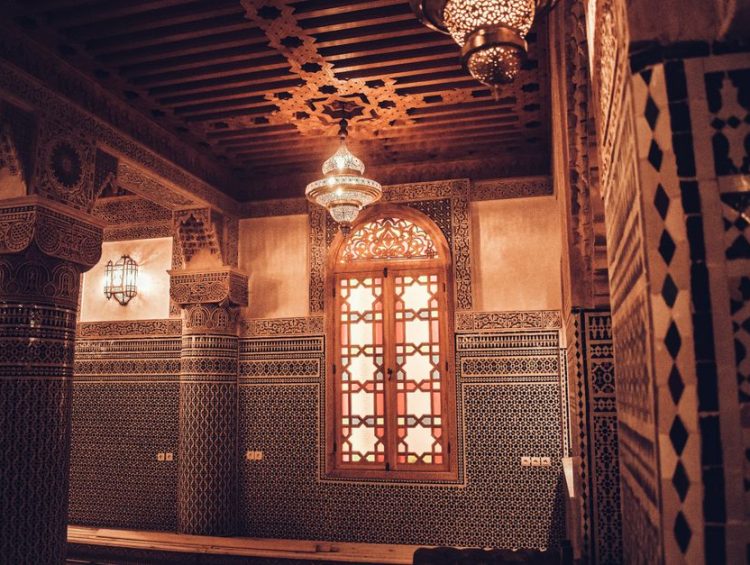
Fes is the center of Moroccan zellige — the geometric tilework you see in riads and palaces across the country. The craft requires cutting glazed tiles into precise shapes by hand, then assembling them face-down into patterns. A single square meter of complex zellige takes a master craftsman days to complete. In Fes, you can visit workshops in the Ain Nokbi pottery quarter and watch the entire process from raw clay to fired tile to cut piece.
Marrakech sells zellige. Fes makes it. That’s the difference in one sentence.
Marrakech: Performance Culture and the Jemaa el-Fnaa Reality
Jemaa el-Fnaa square in Marrakech is unlike anything in Fes. At dusk, it transforms into a massive open-air theater: storytellers, musicians, henna artists, orange juice vendors, and food stalls serving grilled sheep’s head. UNESCO declared it a Masterpiece of the Oral and Intangible Heritage of Humanity in 2001. It’s real, it’s chaotic, and it’s also heavily oriented toward tourists.
That last part matters. The storytellers performing in Darija and Tamazight are often performing for Moroccans, but the economic engine of the square is foreign visitors. Fes has no equivalent. Its cultural life happens behind medina walls, in family homes, in small workshops. You have to work harder to access it.
For a first-time visitor to Morocco, Marrakech is easier. The culture comes to you. In Fes, you have to go find it. Some travelers prefer that. Others find Fes exhausting and even hostile by comparison.
Monuments and Religious History: Fes Wins by a Century
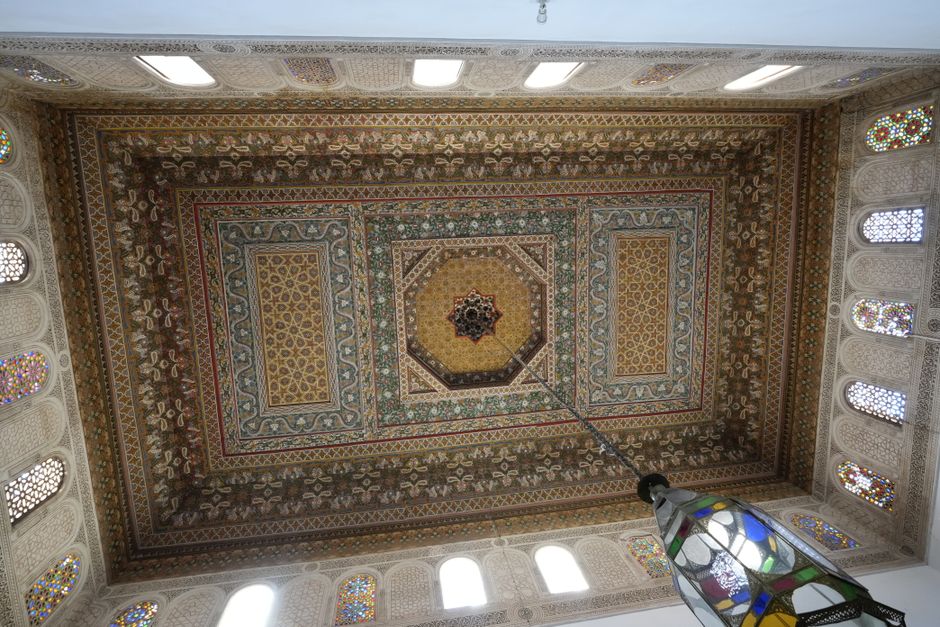
Fes is home to the University of al-Qarawiyyin, founded in 859 CE. UNESCO and Guinness World Records recognize it as the oldest existing, continually operating higher educational institution in the world. It’s also a functioning mosque, which means non-Muslims cannot enter. You can only glimpse the courtyard through the gates. That limitation is itself a cultural lesson: Fes does not rearrange itself for visitors.
Marrakech’s monuments — the Koutoubia Mosque (12th century), the Saadian Tombs (16th century), the Bahia Palace (19th century) — are more accessible and more photogenic. The Ben Youssef Madrasa in Marrakech, reopened after restoration, is one of the most beautiful Islamic buildings in North Africa and you can actually walk through it. Fes has the Bou Inania Madrasa, which is equally stunning but smaller and less restored.
The honest comparison: Marrakech has better monument tourism. Fes has deeper historical significance. If you want to check sites off a list, Marrakech is more efficient. If you want to understand how Islamic scholarship shaped the Mediterranean world, Fes is the answer.
Practical Realities: Getting Lost, Getting Scammed, Getting Around
Both cities will test your patience. Fes will test it more.
| Factor | Marrakech | Fes |
|---|---|---|
| Medina size | ~600 hectares, partially walled | ~540 hectares (Fes el-Bali), densely walled |
| Street layout | Confusing but main arteries exist | 9,000+ streets, many dead ends, no cars |
| Navigation | Google Maps mostly works | GPS frequently fails in narrow alleys |
| Scam pressure | High in tourist zones | Extremely high; fake guides are common |
| Transport | Taxis, buses, caleches, walkable | Taxis outside medina; walking only inside |
| Language | French and English widely spoken | Darija and French dominate; less English |
| Day trips | Atlas Mountains, Essaouira, Agafay desert | Meknes, Volubilis, Middle Atlas |
The fake guide problem in Fes is real and persistent. Young men will approach you at Bab Bou Jeloud (the Blue Gate) and insist you’re going the wrong way, that the street is closed, that they’ll take you to the “real” tannery. They will then demand money. This happens in Marrakech too, but Fes has a denser, more aggressive version because the medina’s layout makes tourists more vulnerable. Hire an official guide through your riad or the tourist office. In most cases, a half-day official guide in Fes costs around 300-400 dirhams ($30-40) and is worth every dirham.
Where to Stay and What to Book in 2026
Your riad choice shapes your cultural experience more than any itinerary item. In Fes, stay inside Fes el-Bali, not the Ville Nouvelle. The medina is the point. In Marrakech, staying in the medina near Jemaa el-Fnaa puts you in the noise; staying in Gueliz or Hivernage puts you in a modern city with a taxi ride to the old town.
- Fes, inside the medina: Riad Laaroussa, Riad Fes Maya, or Dar Seffarine. All are restored traditional houses with courtyards. Dar Seffarine is run by an architect couple who restored it themselves and can arrange artisan visits.
- Marrakech, medina edge: Riad Yasmine, Riad BE Marrakech, or Riad Jardin Secret. These are heavily photographed and more expensive, but they offer easy access to both the medina and modern Marrakech.
- Marrakech, modern side: The Selman Marrakech or the Radisson Blu in Hivernage if you want a pool and quiet after culture overload.
Book guides through your riad, not the street. A reputable Fes guide will have an official badge from the Ministry of Tourism. Ask to see it. In Marrakech, the same rule applies but enforcement is looser and the consequences of a bad guide are less severe because the city is more navigable.
The Verdict: Pick Fes for Depth, Marrakech for Access
If you have one week in Morocco and want maximum cultural exposure with minimum friction, choose Marrakech and add a day trip to the Ourika Valley or Essaouira. You’ll see monuments, eat well, and experience the Jemaa el-Fnaa spectacle. You will not see the deepest Morocco.
If you have five days and want the most concentrated cultural education available in North Africa, choose Fes. Accept that it will be harder. Accept that you will get lost. Accept that the tanneries smell like ammonia and the medina does not care about your comfort. That discomfort is the price of authenticity, and Fes charges it gladly.
My pick for a culture buff in 2026: Fes. Marrakech is the better introduction to Morocco. Fes is the better education. If you can do both, fly into Marrakech, spend three days, then take the train to Fes for four days. The train takes about six and a half hours and costs roughly 300 dirhams ($30) for first class. That combination gives you the performance and the substance.
This is not legal advice — consult a licensed travel professional for itinerary planning.