 Thomas Lucas
 Thailand’s street food scene remains one of the best-value eating experiences on earth. A bowl of boat noodles in Bangkok still costs around 60 baht ($1.70), and a plate of pad krapow with a crispy fried egg rarely exceeds 80 baht ($2.30). But every year, travelers arrive with the same two questions: will this make me sick, and how do I know which stalls are safe? This guide answers both without the fear-mongering.
The reality is that serious food poisoning from Thai street food is far less common than most Western travelers assume. A 2026 study published in the Journal of Travel Medicine found that traveler’s diarrhea affects roughly 8–15% of visitors to Thailand, and most cases trace back to contaminated water, unwashed fruit, or hotel ice — not the sizzling wok in front of you. The stalls that cook at high heat, serve fast, and have a line of locals are statistically your safest bet. The danger zones are pre-cooked food sitting at room temperature, cut fruit that has been out for hours, and drinks with ice of unknown origin.
What follows is a street-level system for navigating Thai markets safely, built from food safety data, local habits, and practical observation across Bangkok, Chiang Mai, and Phuket.
The High-Heat Rule: Why Cooked-to-Order Stalls Win
If you remember one rule, make it this: choose stalls where food is cooked in front of you at high temperature. A wok burner running at full flame reaches surface temperatures above 300°C (570°F). That kills virtually all common pathogens — Salmonella, Campylobacter, E. coli — within seconds. The same applies to boiling broth for noodle soups, which maintains at 100°C (212°F) and destroys most bacteria instantly.
This is not a marginal difference. It is the single biggest predictor of whether a stall is safe. A 2026 food safety audit of Bangkok street vendors, conducted by Thailand’s Ministry of Public Health, found that stalls with continuous high-heat cooking had bacterial counts well below safety thresholds, while stalls selling pre-cooked curries held at warm-but-not-hot temperatures (below 60°C) showed significantly higher contamination levels.
What to Order at a High-Heat Stall
Stick to these dishes, which are almost always cooked to order:
- Pad krapow (stir-fried basil chicken/pork) — flash-fried in a wok, served immediately
- Pad see ew and pad thai — noodles fried at high heat with fresh egg
- Boat noodles (kuay teow ruea) — broth kept at a rolling boil, meat added and cooked in the liquid
- Grilled satay skewers — as long as they come off the grill charred and hot, not from a pile
- Som tam (papaya salad) — made fresh, but ask for “mai phet” (not spicy) if you want to reduce the raw chili load on an empty stomach
The Pre-Cooked Curry Trap
The classic mistake is the curry stall. Massaman, green curry, and panang sit in metal trays for hours, often in the “danger zone” between 4°C and 60°C (40°F–140°F), where bacteria multiply fastest. If the stall has a line of office workers at lunchtime and the trays are being refilled constantly, the turnover rate protects you. If it’s 3 p.m. and the same tray has been sitting there since noon, skip it. You cannot tell by taste or smell whether it’s safe. The risk-reward is not worth it when there are ten wok stalls within fifty meters.
Ice, Water, and the Drinks You Should Actually Order
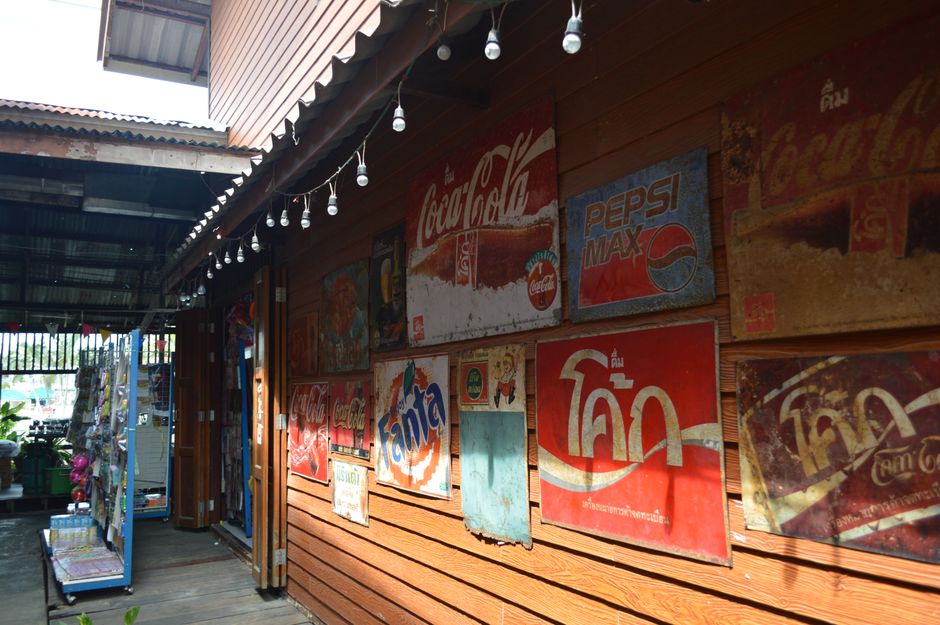
Here’s the thing about ice in Thailand: commercial ice with a hole in the center is safe. It is made in regulated ice factories from filtered water and delivered in sealed bags. The hole is a manufacturing artifact from the freezing process, not a sign of tampering. Locals drink iced coffee and Thai iced tea every day without issue.
The problem is never the ice. It is the water used to make the drink itself, or the glass it is served in if the stall hand-washes with untreated water. Stick to drinks that are bottled or made with boiled water. Fresh coconut water from a machete-chopped coconut is safe — the shell is sterile inside. Sugarcane juice pressed in front of you from whole stalks is generally fine, but the machine’s rollers are rarely cleaned between customers, so if you have a sensitive stomach, pass.
For fruit shakes, watch the stall. If the vendor adds ice from a large commercial bag and uses bottled or filtered water, you are fine. If they scoop ice from an open bucket on the ground, find another stall. The Thai street drink hierarchy, from safest to riskiest:
- Bottled water, canned soda, sealed coconut water
- Fresh coconut chopped to order
- Iced coffee/tea made with commercial ice and boiled water
- Fresh fruit shakes with commercial ice
- Drinks with crushed ice from an open container
Market-by-Market Reality Check: Bangkok, Chiang Mai, Phuket
| Market | Best For | Safety Notes | Price Range (THB) |
|---|---|---|---|
| Or Tor Kor (Bangkok) | High-end produce, cooked food, fruit | Highest hygiene standards of any Bangkok market; pricier but spotless | 100–300 |
| Yaowarat / Chinatown (Bangkok) | Night street food, seafood, noodles | Massive turnover means fresh food; avoid raw oysters from stalls without ice beds | 60–250 |
| Chatuchak Weekend Market (Bangkok) | Snacks, coconut ice cream, grilled meats | Extremely hot and crowded; buy drinks from sealed bottles only | 40–150 |
| Chiang Mai Gate Night Market | Northern Thai food, khao soi, sai oua sausage | Mostly cooked-to-order; the sai oua is grilled fresh | 50–120 |
| Sunday Walking Street (Chiang Mai) | Snacks, fried insects, fruit | Tourist-heavy; stick to stalls with visible cooking | 30–100 |
| Phuket Weekend Market (Naka) | Southern Thai curries, grilled seafood | Seafood must be on ice or cooked to order; avoid pre-grilled fish that has cooled | 80–300 |
Or Tor Kor market in Bangkok is the outlier worth knowing about. It is the only market in Thailand that consistently scores in the top tier of government hygiene inspections. It is more expensive — a plate of cooked food runs 150–300 baht — but if you are anxious about street food on day one, this is the place to ease in. The produce section alone is worth the trip: mangosteens, durian, and longan laid out on spotless displays.
What Actually Makes Travelers Sick (It’s Not What You Think)
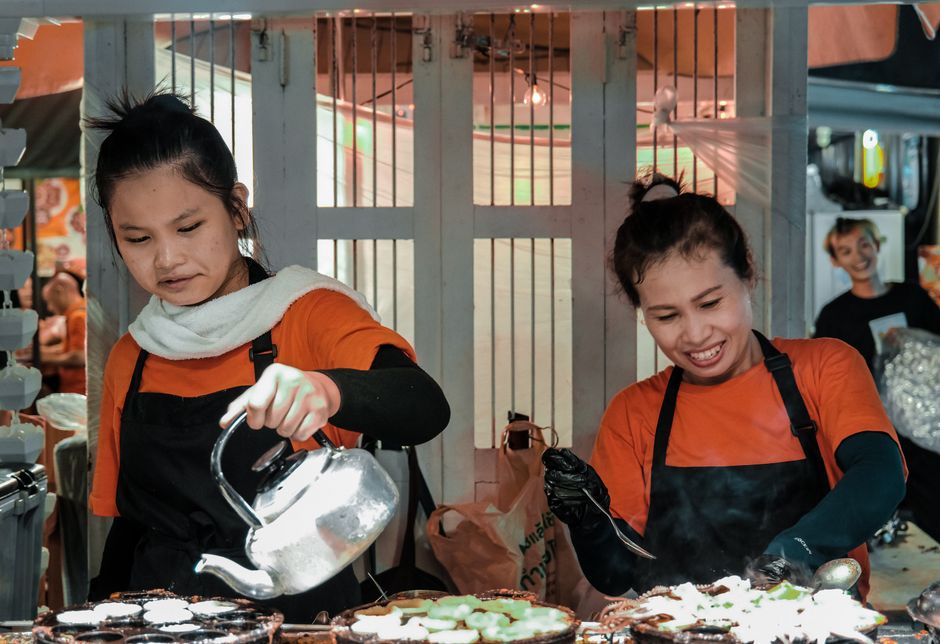
Let me be blunt: the street food stall is rarely the culprit. The most common causes of foodborne illness among travelers in Thailand, based on data from travel clinics and hospital reports, are:
- Hotel breakfast buffets — eggs and meat held at warm temperatures for hours
- Cut fruit bought in the afternoon — watermelon and papaya sliced in the morning, sitting in the sun
- Raw or undercooked seafood — especially oysters, cockles, and raw shrimp in som tam
- Salad greens washed in tap water — including garnishes on otherwise safe dishes
- Ice from street-side buckets — not commercial ice with the hole
The raw shrimp som tam deserves special mention. In Isaan (northeastern Thai) cuisine, som tam pu pla ra includes raw freshwater crab and fermented fish sauce. The fermentation does not kill parasites. If you want to try it, order the version with cooked crab or ask for “som tam thai” which skips the raw seafood entirely.
How Locals Choose a Stall: The Three-Second Scan
Thai people do not read reviews. They scan a stall in about three seconds and decide. Here is the scan, in order:
- Turnover — is there a queue of Thai people? A line means the food is good AND the ingredients are fresh because nothing sits. An empty stall at 7 p.m. is empty for a reason.
- Heat source — is there an active flame, boiling pot, or sizzling grill? If the cooking surface is cold and the food is pre-made, walk on.
- Cleanliness of the immediate surface — not the floor, not the walls. The cutting board and the vendor’s hands. A vendor who wipes the board between orders cares about cross-contamination.
That last point matters more than most travelers realize. Cross-contamination — using the same knife for raw chicken and then for fresh vegetables without washing — is a far bigger risk than the age of the oil or the cleanliness of the plastic chair.
What to Carry and What to Skip
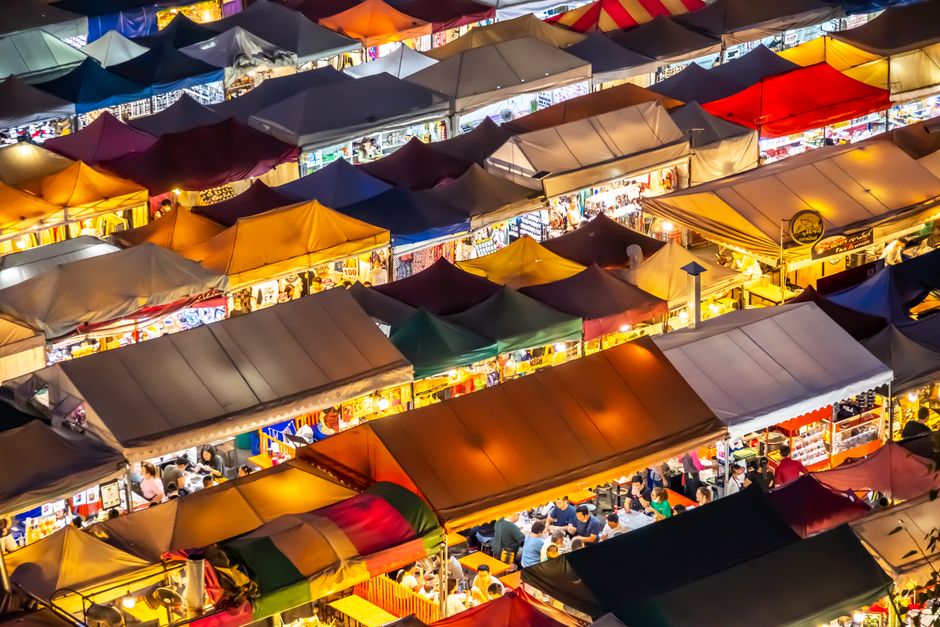
You do not need a pharmacy in your bag. But three things genuinely help:
- Alcohol-based hand sanitizer (70%+) — for after handling money and before eating with your hands
- Oral rehydration salts (ORS) — available at every 7-Eleven in Thailand for about 10 baht. If you do get sick, this is more important than any medication.
- Loperamide (Imodium) — for long bus or flight days only. Most travel doctors now advise against taking it for routine traveler’s diarrhea because it traps pathogens in your gut. Use it only if you cannot afford to be near a toilet.
Skip the activated charcoal. The evidence for it is weak, and it can interfere with other medications. Skip the probiotic supplements marketed for travel — the research does not support them preventing traveler’s diarrhea. Save your money for an extra plate of mango sticky rice.
The Verdict: A Simple System for Safe Street Food
You do not need to overthink this. Here is the entire system in one paragraph: Eat at stalls with a queue of locals, order food that is cooked to order at high heat, drink bottled or boiled beverages, and avoid pre-cooked curries and raw seafood that has been sitting out. That single rule eliminates the vast majority of risk while letting you eat some of the best food of your life for under $5 a meal.
For the first day or two, ease in. Start with a busy noodle stall at lunchtime. Order a pad thai or a bowl of boat noodles. Watch the cook work. Then graduate to the night markets, the curry stalls with fast turnover, and the grilled meat vendors. By day three, you will be eating like a local — because you will have learned to scan like one.
Final comparison, because it helps to see the hierarchy clearly:
- Safest options: Cooked-to-order wok dishes, boiling noodle soups, grilled skewers served hot, fresh coconut, bottled drinks
- Moderate caution: Pre-cooked curries with high turnover, fruit shakes with commercial ice, som tam made fresh without raw seafood
- Avoid unless you are confident: Raw oysters, raw shrimp som tam, cut fruit sold after noon, drinks with crushed ice from open buckets, any stall with no customers and no visible heat source