 Thomas Lucas
 Want to know if Hamburg is still worth visiting when the sky is grey, the wind comes off the Elbe, and daylight fades before dinner? Yes, but the city rewards a different kind of plan in late winter: short outdoor sections, warm indoor pauses, and realistic timing for the Sunday Fish Market.
Is Hamburg worth visiting in late winter?
Yes, if you want Hamburg at its most atmospheric rather than its most comfortable. Late winter usually means cold wind, wet paving stones, bare trees, and fast-changing light. Those conditions make the harbour feel industrial and dramatic, while the red brick of Speicherstadt often looks richer under a low sky. You should not plan a full day outdoors without a backup, but you can build a strong visit around two- to three-hour walking blocks.
The best reason to come at this time is space. Popular viewpoints and canal bridges can feel calmer outside the main spring and summer season, and the city’s maritime character does not depend on warm weather. The main exception is the Fish Market: it remains lively, but the winter opening window is shorter. Treat late winter as a timing exercise, not a failed summer holiday.
Which harbour walk works best in cold weather?
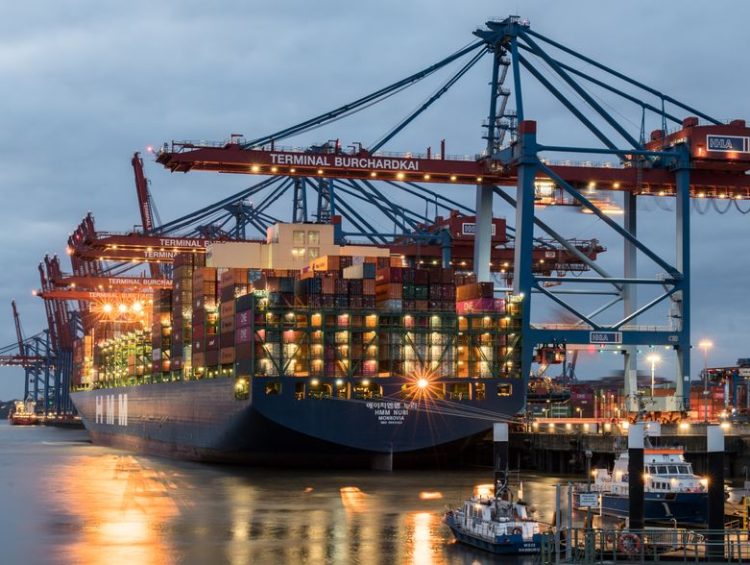
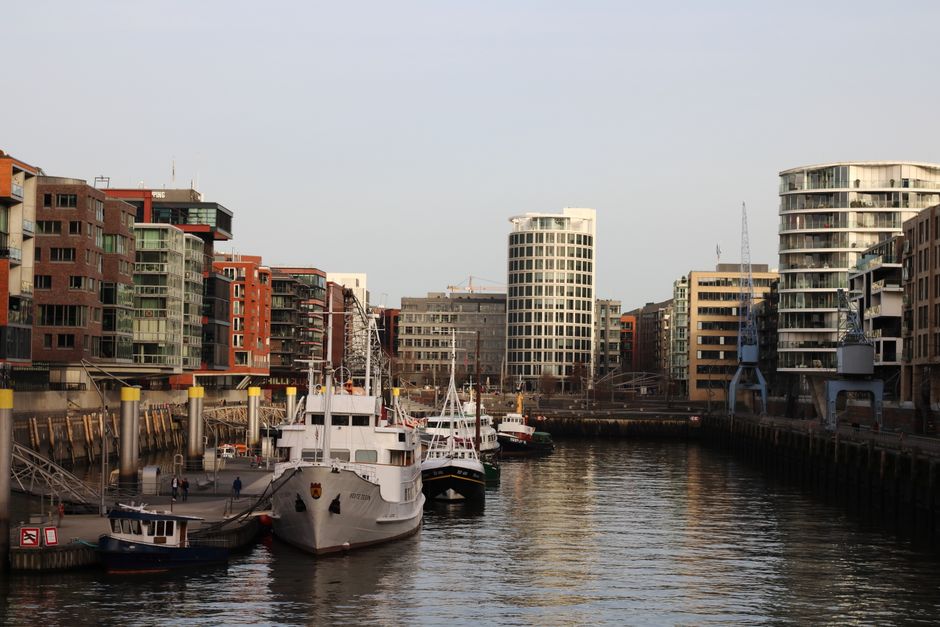
For most visitors, the strongest route begins at Landungsbrücken and follows the Elbe east or west depending on the wind. The harbour is easy to reach by public transport, and the HADAG ferry network gives you a practical escape if the weather turns rough. The table below compares the most useful walking options.
| Route | Approximate time | Best feature | Main drawback |
|---|---|---|---|
| Landungsbrücken to Fish Market | 35–50 minutes | Open Elbe views, docks and the Fischauktionshalle | Strong wind and little shelter |
| Landungsbrücken to Elbphilharmonie | 35–45 minutes | Waterfront views and modern harbour architecture | Busy paths near major sights |
| Speicherstadt canal loop | 60–90 minutes | Brick warehouses, bridges and sheltered streets | Slippery paving after rain |
| Ferry line 62 from Landungsbrücken | About 30 minutes one way | Harbour views without continuous exposure to wind | Less useful during crowded commuter periods |
Landungsbrücken to the Fish Market
Choose this walk when you want open water, working harbour scenery, and a clear sense of Hamburg’s scale. Start beside the Landungsbrücken, watch the ferries leave, then continue along the waterfront toward the Altona Fish Market. The path is straightforward, but the wind can feel much colder beside the river than it does inland. A waterproof outer layer matters more than a thick sweater alone.
When to choose the ferry instead
Take ferry line 62 when your group wants the harbour experience but the weather has become unpleasant. It is part of the local transport system, not simply a sightseeing attraction, so check the current timetable and allow space for commuters. A Hamburg CARD, an appropriate hvv ticket, or a Deutschlandticket may cover public transport use under the conditions applying on your travel date. The clear verdict is simple: walk for atmosphere, take the ferry for distance and shelter.
How should you explore Speicherstadt when rain arrives?
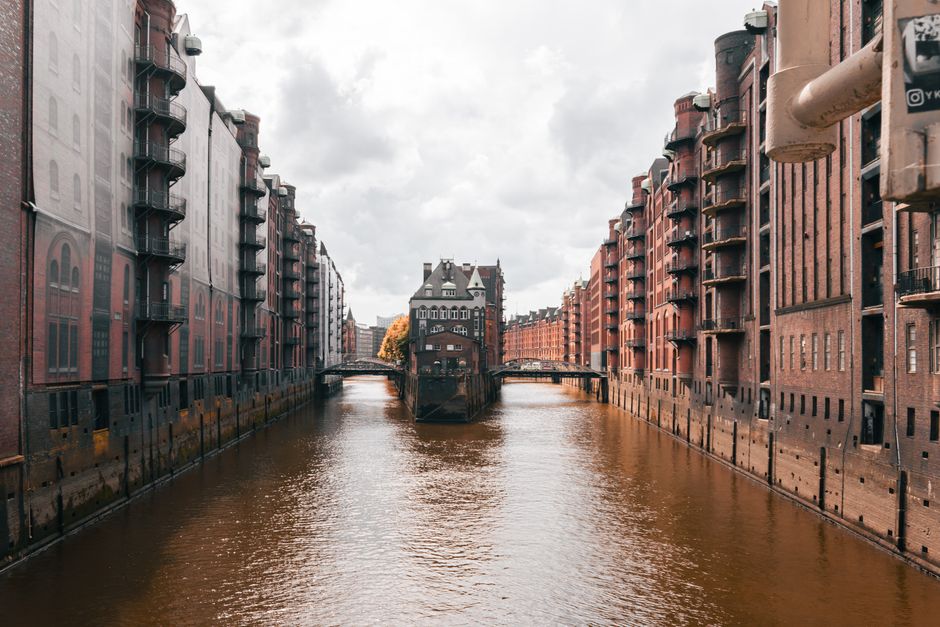
Speicherstadt deserves more than a quick photograph from one bridge. The district was built as a warehouse complex for goods arriving through Hamburg’s port, and its design still makes that commercial purpose visible. Long brick blocks run beside narrow canals, with streets and bridges arranged around the movement of cargo rather than the comfort of tourists. UNESCO lists Speicherstadt and the adjacent Kontorhaus district with Chilehaus as a World Heritage site, but the practical pleasure is more immediate: the area gives you a dense sequence of visual details within a compact walking zone.
Start with the canal-side streets
Begin near the western edge of the district and walk east through the warehouse streets. Look up at the pointed gables, loading doors, cranes, and arched passages. The buildings were developed in several phases between 1885 and 1927, and the district is roughly 1.1 kilometres long. That scale makes it possible to see a great deal without committing to a long exposed walk. If rain begins, cross toward the larger streets and use a café or museum as a warm pause instead of trying to finish every bridge.
Use the bridges as separate viewpoints
Do not treat Speicherstadt as one continuous promenade. Its best views come in short sections. Stop at a canal corner, compare the reflection of the brick façades, then move on. After rain, the dark stone and water can create excellent photographs, but slick surfaces make rushed walking a poor choice. Shoes with reliable grip are more useful than fashionable footwear with smooth soles.
Plan around the tide
Boat trips through Speicherstadt’s canals are not guaranteed at every water level. Low tide can prevent smaller vessels from entering some passages, and operators may make the final decision shortly before departure. That is why a canal cruise should be an optional layer, not the foundation of your day. The better plan is to walk the district first, then take a boat only if conditions and departure times align. For late winter, this approach protects the day from one cancelled or altered activity.
What should you do at Hamburg Fish Market on Sunday?
The Hamburg Fish Market is worth visiting for its atmosphere, but only if you accept its schedule. From 15 November to 14 March, the official winter opening period is Sunday from 7:00 to 9:30. The market is held at Große Elbstraße 9 in Altona and has operated as a trading place since 1703. It is not a relaxed brunch market that begins late in the morning. By then, the main event is usually over.
A practical winter sequence
- Arrive close to 7:00. The first hour gives you the clearest view of the stalls and the strongest sense of the market’s early-morning rhythm.
- Walk the outdoor stalls before eating. Fish, fruit, flowers, plants, clothing, and souvenirs may all appear, so take in the full mix before settling on breakfast.
- Try a fish sandwich or hot drink. The food is part of the experience, but the riverfront location means your meal may still be exposed to cold air.
- Step inside the Fischauktionshalle if it is open. The historic hall adds shelter, architecture, and a livelier indoor atmosphere.
- Leave before 9:30. Continue toward the Elbe promenade, walk back toward Landungsbrücken, or use public transport for the next part of the day.
What can go wrong?
Storm surge or high water can affect the market because parts of the site sit directly beside the Elbe. Stalls and individual offerings can also change, so do not travel across the city for one named vendor or one exact food item. The strongest reason to visit is the combined experience of shouting traders, river air, old architecture, and early-morning crowds. If your group dislikes early starts, cold exposure, or noisy markets, choose a harbour walk and a later indoor meal instead.
Which late-winter mistakes can ruin a harbour day?
The biggest mistake is treating Hamburg’s waterfront like a mild-weather sightseeing route. Late winter is manageable when you control exposure, timing, and distance. It becomes tiring when every activity depends on standing outside beside the Elbe.
Mistake one: wearing warmth without weather protection
A thick cotton coat can become heavy and cold after rain. Use layers, a water-resistant outer shell, gloves, and footwear with grip. Wind protection matters especially at Landungsbrücken, the Fish Market, and open ferry decks.
Mistake two: booking a full outdoor day
Pair one exposed activity with one sheltered activity. For example, walk from Landungsbrücken to the Fish Market, warm up indoors, then explore Speicherstadt. This structure gives you a clear stopping point if the weather worsens.
Mistake three: arriving at the wrong Fish Market hour
Late winter hours are not the same as the warmer-season schedule. From November through March, plan for 7:00–9:30 on Sunday rather than the summer opening time. Confirm the date and any weather-related changes before leaving your accommodation.
Mistake four: assuming every boat route is a sightseeing cruise
HADAG ferries carry residents as well as visitors. Keep boarding areas clear, follow crew instructions, and avoid blocking access with luggage. The ferry is an excellent low-cost way to see the harbour, but it is still public transport and may be busy.