 Thomas Lucas
 You’ve seen the Instagram reels. Steam rising from a bowl of pho. A woman in a conical hat ladling broth. The caption: “Life-changing.” You book the flight. You land in Hanoi. You find the famous pho spot with 4.8 stars on Google Maps. You take a sip. And you think… that’s it?
That was me three weeks ago. I ate pho in Hanoi, Saigon, Hoi An, and Hue. I ate it at 6am from street stalls with plastic stools and at restaurants with air conditioning and laminated menus. And I have a confession: pho is not even in my top 5 Vietnamese dishes. Not close.
Here’s the reality check nobody posts on Instagram.
Pho Is Good. It Is Not the Best Thing You Will Eat in Vietnam.
Let me be clear before the pho purists come for me. Pho is a solid bowl of noodle soup. The broth is clean. The beef is sliced thin. The herbs are fresh. It costs about 40,000 VND ($1.60) at a decent street stall. It’s a perfectly good breakfast.
But “life-changing”? No. Here’s why.
The Instagram Expectation Problem
Most travelers arrive in Vietnam primed by food media to believe pho is the pinnacle of Vietnamese cuisine. It’s not. It’s the most famous, not the most complex. Vietnamese cooks will tell you the same thing. Pho is a northern dish, born in Hanoi around 1900. It’s comfort food. It’s what you eat when you want something warm and simple before work.
The broth is typically simmered for 6-8 hours with beef bones, charred onion, ginger, star anise, cinnamon, and cloves. That sounds impressive until you compare it to bun bo Hue, which has lemongrass, shrimp paste, pork knuckle, blood cubes, and a broth that takes 12+ hours to build properly. Or mi quang, which has turmeric noodles, quail eggs, pork, shrimp, peanuts, and rice crackers. Pho is the plain white t-shirt of Vietnamese food. Fine. Functional. Not the statement piece.
Where Pho Actually Goes Wrong
Most tourists eat bad pho. This is not a hot take. The pho at tourist-facing restaurants in Hanoi’s Old Quarter is often watered down, over-salted, or loaded with MSG to compensate for a rushed broth. The pho at the airport is an abomination. The pho at your hotel breakfast buffet? That’s not pho. That’s beef-flavored water with noodles.
Good pho requires a specific context: a small stall, a cook who’s been making it for 20 years, and a bowl eaten before 9am. The famous Pho Gia Truyen in Hanoi (49 Bat Dan, ~50,000 VND) is genuinely good. Pho Thin (13 Lo Duc) is another solid choice. But even the best pho I had — at Pho Gia Truyen at 7am on a Tuesday — was a 7.5 out of 10. Delicious. Not transcendent.
The Dish That Actually Blew My Mind: Bun Cha
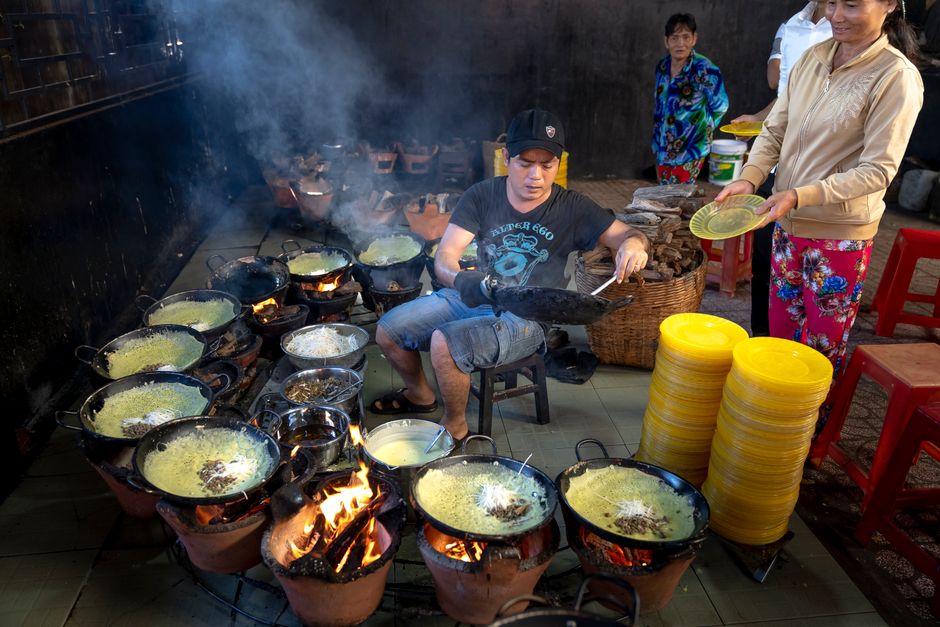
I landed in Hanoi, dropped my bags, and walked 15 minutes to Bun Cha Huong Lien — the spot where Anthony Bourdain ate with Obama in 2016. I ordered the Obama combo: bun cha, fried seafood spring roll, and a Hanoi beer. Total cost: 90,000 VND ($3.60).
Bun cha is grilled pork belly and pork patties served in a bowl of warm, sweet-savory fish sauce broth with pickled green papaya. You get a plate of cold rice vermicelli noodles and a mountain of herbs. You dip the noodles into the broth, grab a piece of pork, add some chili and garlic, and eat. The combination of smoky char from the grilled pork, the sharp tang of the fish sauce, the freshness of the mint and perilla leaves — it’s a symphony. Pho is a single instrument. Bun cha is the whole orchestra.
And here’s the thing: bun cha is a Hanoi specialty. You can find it in Saigon, but it’s not the same. The southern version is sweeter, less smoky, and often uses different cuts of pork. If you’re only in Vietnam for a week and you only eat pho, you’ve missed the point entirely.
Bun Cha Huong Lien vs. Bun Cha Dac Kim
Two famous spots. Two different experiences. Huong Lien is touristy now — the Obama photos are on the wall, the menu has English translations, and the prices are slightly higher. But the bun cha is still excellent. The pork is charred properly, the broth is balanced, and the spring rolls are crispy without being greasy.
Bun Cha Dac Kim (1 Hang Manh) is the old-school option. It’s been around since 1966. The bun cha comes with massive pork patties and a broth that’s more intense, more fish-sauce-forward. It’s a dirtier, more chaotic experience — plastic stools, shared tables, staff who don’t speak English. I preferred Dac Kim. The broth had more depth, and the patties were juicier. Price: 50,000 VND ($2).
MSG Is Not Your Enemy. Here’s What Actually Matters.
Let’s talk about the elephant in the room. Every food forum has someone asking: “Is Vietnamese food full of MSG? Will it make me sick?”
Short answer: yes, Vietnamese cooks use MSG. No, it won’t hurt you. MSG is just sodium and glutamate, an amino acid found naturally in tomatoes, parmesan cheese, and mushrooms. The “MSG headache” thing has been debunked by dozens of double-blind studies. The FDA classifies it as GRAS — generally recognized as safe.
What actually matters more: the freshness of the herbs, the quality of the fish sauce, and the cleanliness of the stall. A bowl of pho from a busy street stall where the broth is constantly moving is safer than a bowl from a quiet restaurant where the broth has been sitting for hours. Busy stalls = high turnover = fresher food. That’s the rule. Not “avoid MSG.”
The Fish Sauce Hierarchy
If you want to understand Vietnamese food, understand fish sauce. It’s the backbone of the cuisine. The best fish sauce comes from Phu Quoc Island — brands like Red Boat and Phu Quoc Fish Sauce are the gold standard. First-press fish sauce (nuoc mam nhi) is made from just anchovies and salt, fermented for 12 months. It’s savory, funky, and slightly sweet.
Cheap fish sauce is made with added water, sugar, and sometimes hydrolyzed wheat protein. It’s thinner, saltier, and lacks complexity. When you’re eating in Vietnam, the quality of the fish sauce is the difference between a good meal and a great one. The best restaurants take pride in their fish sauce blend — often mixing fish sauce with lime juice, sugar, garlic, and chili to create nuoc cham, the dipping sauce that accompanies almost everything.
The 6 Dishes That Actually Deserve the Hype
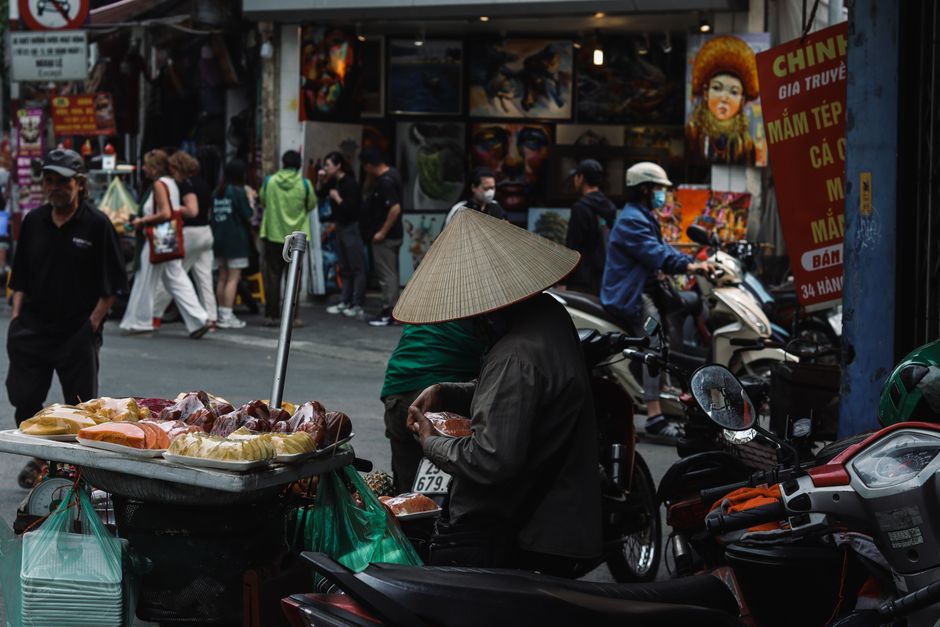
After three weeks and roughly 75 meals, here’s my honest ranking. This is not a listicle designed for SEO. This is what I’d tell a friend who has one week in Vietnam and wants to eat well.
| Rank | Dish | Region | What It Is | Price Range (VND) | My Verdict |
|---|---|---|---|---|---|
| 1 | Bun Cha | Hanoi (North) | Grilled pork patties + belly in fish sauce broth, served with cold vermicelli and herbs | 40,000 – 100,000 | The best thing I ate in Vietnam. Smoky, tangy, fresh. Eat it in Hanoi. |
| 2 | Cao Lau | Hoi An (Central) | Thick noodles with pork slices, crispy croutons, herbs, and a small amount of broth | 35,000 – 60,000 | Only available in Hoi An. The noodles are made with water from a specific well. Worth the trip. |
| 3 | Mi Quang | Da Nang/Quang Nam (Central) | Turmeric noodles with shrimp, pork, quail egg, peanuts, and rice crackers | 30,000 – 50,000 | The most underrated Vietnamese dish. Half soup, half salad. Completely unique. |
| 4 | Banh Mi | Saigon (South) | Baguette with pate, cold cuts, pickled vegetables, cilantro, and chili | 15,000 – 50,000 | Banh Mi Huynh Hoa in Saigon is the gold standard. Get the mixed meat. |
| 5 | Bun Bo Hue | Hue (Central) | Spicy beef noodle soup with lemongrass, shrimp paste, pork knuckle, and blood cubes | 35,000 – 70,000 | Pho’s spicier, funkier cousin. More complex broth. Not for picky eaters. |
| 6 | Pho | Hanoi (North) | Beef noodle soup with clear broth, rice noodles, and herbs | 30,000 – 80,000 | Good. Not great. Eat it once for breakfast, then move on. |
Cao Lau deserves special mention. You literally cannot get it outside Hoi An. The noodles are made with water from the Ba Le well, which has a specific mineral content that gives the noodles their texture. Add char siu pork, fresh herbs, crispy rice crackers, and a small amount of smoky broth, and you have a dish that’s genuinely tied to a place. That’s rare in a globalized food world.
Street Food Safety: What Actually Gets Travelers Sick
Let’s be real about the thing everyone worries about but no one wants to admit. Food poisoning in Vietnam is a legitimate concern. But it’s not the street food that gets you. It’s the things you don’t think about.
Here’s what actually matters:
- Ice is fine. Vietnam produces commercial ice that’s safe. The big cylindrical blocks with a hole in the middle are made in factories. If the ice looks like that, it’s safe. Avoid crushed ice from unknown sources.
- Herbs are the risk. Fresh herbs are washed in tap water, which can carry bacteria. If you’re worried, eat at busy stalls where the herbs are being washed and used constantly. Don’t eat herbs from a quiet restaurant with pre-plated salads sitting out.
- Tap water is never fine. Don’t brush your teeth with it. Don’t rinse your toothbrush with it. Use bottled water for everything.
- Busy stalls are safe stalls. High turnover means food isn’t sitting. A stall with 20 locals eating at 7am is safer than a restaurant with one tourist at 3pm.
I ate 75 meals in Vietnam. I got sick once. It was from a smoothie at a tourist cafe in Hoi An, not from the street stalls. The blender was probably rinsed with tap water. Lesson learned: stick to bottled drinks or beer at tourist cafes.
What I’d Tell a First-Timer
If you have one week in Vietnam, skip the pho obsession. Here’s your eating plan.
In Hanoi: eat bun cha for lunch at Bun Cha Dac Kim. Eat pho once for breakfast at Pho Gia Truyen — get there before 8am. Eat banh cuon (steamed rice rolls with pork and mushrooms) at Banh Cuon Gia Truyen. Drink egg coffee at Cafe Giang.
In Hoi An: eat cao lau at any stall in the central market. Eat white rose dumplings at the same market. Get a banh mi from Banh Mi Phuong — yes, the Anthony Bourdain spot. It’s still good.
In Saigon: eat banh mi at Banh Mi Huynh Hoa. Eat com tam (broken rice with grilled pork chop) at Com Tam Ba Ghien. Eat hu tieu (southern noodle soup) at any busy street stall in District 5.
Pho is the gateway. Bun cha is the destination. Cao lau is the hidden gem. Mi quang is the thing you’ll crave when you get home.
Vietnamese food is not one dish. It’s a regional tapestry that changes every 100 kilometers. Treat it that way.