 Thomas Lucas
 Most street food illness isn’t bad luck. It’s a failure to read the stall. You can eat at night markets in Bangkok, hawker centers in Singapore, and roadside carts in Hanoi without spending a night in the bathroom. The rules are specific and learnable. This guide tells you which foods carry the highest risk, how to vet a stall in under a minute, and when to walk away from something that looks delicious.
The 60-Second Stall Vetting System
You don’t need a microbiology degree. You need three observations, made in order, before you order anything.
Turnover rate beats cleanliness theater
A stall with a long queue of locals is usually safe, but not because the food is “authentic.” It’s safe because high turnover means ingredients don’t sit. Look for a stall where the cooking surface is constantly in use. A wok that never cools down kills more pathogens than any sanitizer. If you see pre-cooked meat sitting in a glass case at 3 p.m. with no customers, skip it. That meat has been in the danger zone (4°C to 60°C) for hours. A busy stall turns over its entire stock every 30-45 minutes. That’s the real safety metric.
Watch the cook’s hands, not the counter
Counter surfaces lie. A damp cloth wiped across a counter spreads bacteria while making it look clean. What matters is hand contact with raw food. Does the cook handle raw chicken and then touch cooked noodles? Does the same pair of tongs touch raw meat and then finished plates? You want to see separation: one hand for money, one hand for food, or better yet, a dedicated cash person. If the cook handles cash and then immediately handles your food, that’s a fail. Money is one of the most contaminated objects in any market.
Fire, smoke, or steam must be visible
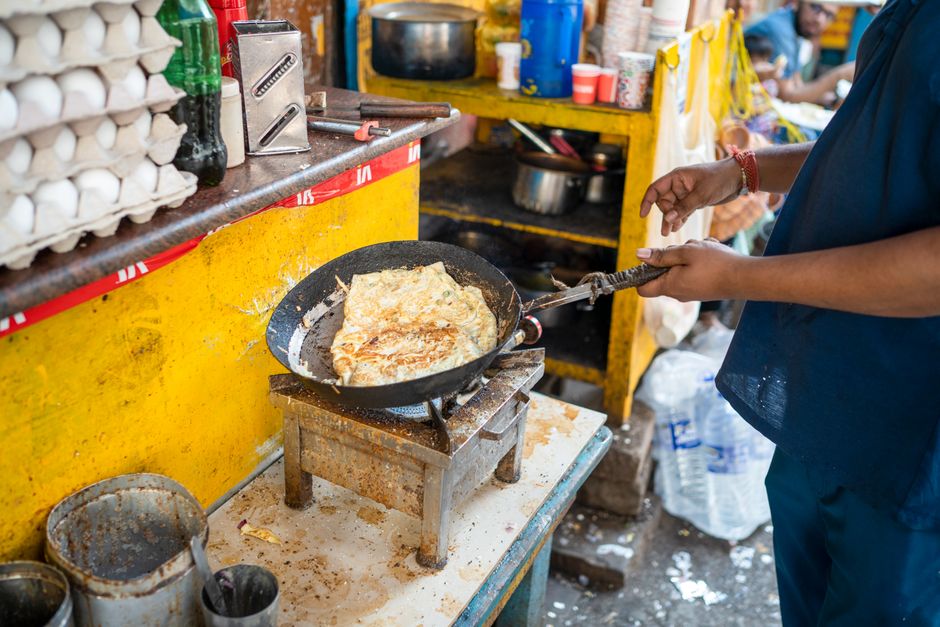
Heat is your best friend. Every safe street food item has either been cooked at high temperature immediately before serving or is kept visibly steaming. If you can’t see fire, smoke, or steam, the food is in the danger zone. This is why fresh stir-fries, grilled skewers cooked to order, and boiling soups are statistically safer than pre-assembled cold dishes. The heat isn’t a guarantee, but it’s the single best visible signal you have.
Highest-Risk vs. Lowest-Risk Street Foods: A Practical Table
Not all street food carries equal risk. The table below ranks common categories by their likelihood of causing foodborne illness, based on how they’re prepared, stored, and served.
| Risk Level | Food Type | Examples | Why It’s Risky (or Safe) |
|---|---|---|---|
| Lowest | Cooked-to-order at high heat | Pad thai, char kway teow, yakitori, banh xeo | Wok or grill reaches 200°C+; food served immediately |
| Low | Boiling soups and stews | Pho, laksa, tom yum, congee | Continuous boiling kills vegetative bacteria; broth kept above 90°C |
| Moderate | Grilled meats on skewers | Satay, yakitori, chuanr | Safe if cooked through and served hot; risk if pre-grilled and held warm |
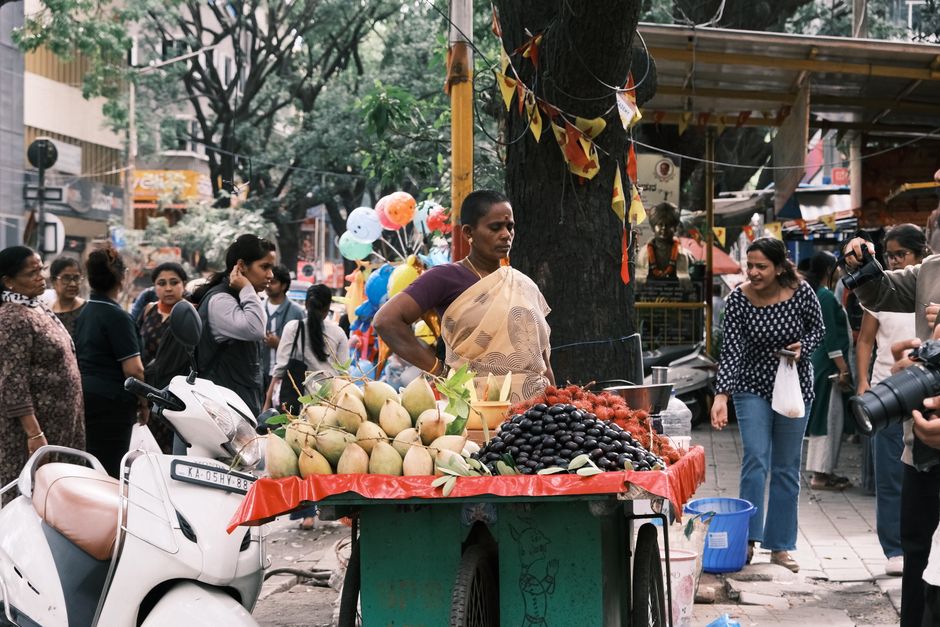
| Moderate | Fresh fruit with peel | Mango, banana, rambutan, mangosteen | Safe if you peel it yourself; avoid pre-cut fruit with no refrigeration |
| High | Cold or room-temperature dishes | Gỏi cuốn (fresh spring rolls), papaya salad, cold noodles | Raw vegetables and cooked shrimp held at ambient temperature for hours |
| Highest | Raw or undercooked items | Blood cockles, raw oysters, rare pork, raw beef salad | Pathogens not killed by heat; hepatitis A and Vibrio risk |
This table isn’t a reason to avoid street food entirely. It’s a decision tool. Eat from the top two rows without hesitation. Approach the bottom two rows with real caution. A fresh spring roll from a busy Hanoi stall at 8 a.m. might be fine. The same spring roll at 3 p.m. after sitting in a glass case is a different product.
The Ice and Water Rule Nobody Explains Clearly
Here’s the truth that most travel advice gets wrong: in most of urban Southeast Asia, ice is safer than tap water. The ice you get in your Thai iced tea or Vietnamese cà phê sữa đá is almost always made in commercial ice factories from purified water. It comes in large blocks or tubes with a hole through the middle. That hole is the tell — it’s a manufacturing artifact, not a hand-made product. Hand-chipped ice from a block is also generally safe because the block itself was made from treated water.
What’s NOT safe is water that’s been sitting. That includes the water used to wash raw vegetables, the water in a bucket used to rinse plates, and any drink made with unfiltered tap water. When you order a smoothie or fresh juice, watch where the liquid comes from. If the vendor adds water from a bottle or a sealed container, fine. If they top it up from a tap, decline.
The same logic applies to raw garnishes. That sprig of mint on your pho or the bean sprouts on the side of your pad thai were washed in local water. Heat from the soup kills some surface bacteria, but the sprouts you add yourself at the table are raw. If you’re in a country with known water issues, ask for your dish without raw sprouts or herbs, or add them only if you’ve seen them stored dry and clean.
Regional Differences That Actually Matter
Street food safety isn’t uniform across Asia. A rule that works in Singapore is useless in rural Myanmar. Here’s what actually varies by region.
Singapore: The gold standard
Singapore’s hawker centers are the safest street food environment in the world, period. Every stall is licensed, inspected, and graded by the National Environment Agency. The grading system (A, B, C, D) is posted at every stall. You can eat at a “C” stall and still be safer than at most Western fast-food restaurants. The hawker center system works because it centralizes water, waste disposal, and pest control. If you’re nervous about street food, start in Singapore. It’s the training wheels you don’t actually need.
Thailand and Vietnam: High turnover, high reward
These countries have the best street food in the world and a real, if manageable, risk profile. The key difference from Singapore is that stalls are independent, not centralized. You’re relying on the individual vendor’s practices. That’s why the 60-second vetting system matters so much here. In Bangkok and Hanoi, the best stalls are the ones with a wok that never stops moving. Famous spots like Thipsamai in Bangkok (pad thai) or the lunch-only bánh cuốn stalls in Hanoi survive on reputation and volume. Reputation is a safety signal. If a stall has been in the same spot for 20 years and still has queues, it’s not poisoning people.
India: Different rules entirely
India requires a separate mindset. The street food is extraordinary — pani puri, chaat, vada pav, dosa — but the risk profile is higher than Southeast Asia for several reasons. Water quality is more variable. Raw chutneys and yogurt-based items sit at ambient temperature. Pani puri involves flavored water that may not be from a safe source. The rule in India is stricter: eat only items cooked at high heat immediately before serving, and avoid anything with raw water, raw chutney, or unpeeled fruit. A freshly fried samosa or a dosa cooked on a hot tawa is fine. A plate of pre-assembled chaat with raw onions and chutneys is a gamble. Many experienced travelers eat vegetarian in India not for ethics but because meat handling is the biggest variable.
When to Skip the Cart: Failure Modes and Red Flags
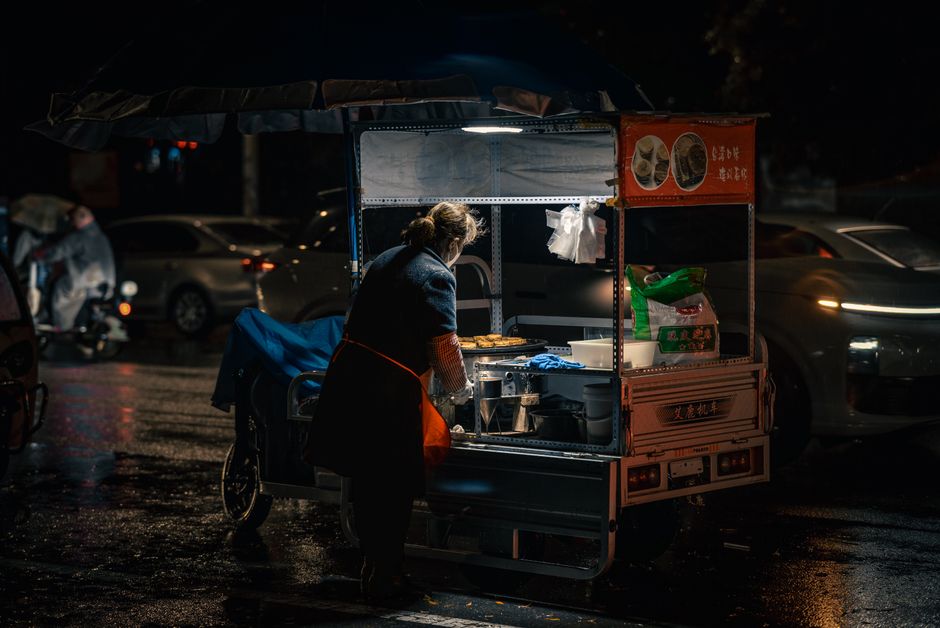
Knowing when NOT to eat is more valuable than knowing what to eat. These are the specific failure modes that cause illness.
- Pre-cooked meat at rest. If you see grilled chicken skewers or fried pork sitting in a pile, not on a grill, not in a steamer, just sitting — that’s a no. Heat kills. Resting at 30°C for two hours undoes the killing.
- The same utensils for raw and cooked. Watch for a cook who uses the same tongs to place raw chicken on the grill and then to serve cooked chicken. Cross-contamination is the number one cause of street food illness. This is not subtle — you can see it if you look.
- No customers but full trays. Empty trays at 7 p.m. mean the food sold out and was replenished. Full trays at 7 p.m. mean the food has been sitting since the afternoon. This is the single most reliable signal at any market.
- Ice that’s been re-frozen or is chipped from a block that’s been on the ground. The block itself is usually fine, but if it’s been dragged through a wet market and chipped with a dirty tool, that’s contamination risk.
- Shellfish at inland stalls. Oysters, cockles, and clams are filter feeders. They concentrate whatever is in the water. At a coastal stall with high turnover, they’re a calculated risk. At an inland night market 200 km from the sea, the supply chain has been too long. Skip.
One more thing: your stomach is not a test kitchen. If a stall fails two or more of the vetting checks, don’t rationalize it. There’s always another stall 50 meters away. The cost of being wrong is a ruined 48 hours of your trip. The cost of walking away is zero.
Street food in Asia is one of the great travel experiences. It’s also a system you can learn to read. High heat, high turnover, clean separation between raw and cooked, and visible steam. That’s the whole game. Get those four things right and you’ll eat better than you do at home.