 Thomas Lucas
 Pho appears on roughly 40,000 restaurant menus outside Vietnam, but it represents less than 5% of what Vietnamese people actually eat daily. The country runs on a far more interesting engine: regional noodle soups, crispy rice pancakes, and herb piles that never make it onto Western menus.
I spent six weeks eating from Hanoi to Saigon. Not once did a local friend suggest pho. They suggested bun cha, cao lau, mi quang, and a dozen other dishes I’d never heard of. This guide covers the seven regional dishes that matter, where to find them, and what to order instead of defaulting to the tourist bowl.
The Regional Food Map: Why Vietnam Has No Single Cuisine
Vietnam stretches 1,650 kilometers north to south. Climate, history, and geography split the food into three distinct zones. Northern food is salty and subtle. Central food is spicy and complex. Southern food is sweet and herb-heavy.
You cannot understand Vietnamese food by eating in one city. A Hanoi local will describe Saigon food as “too sweet.” A Saigon local will call Hanoi food “bland.” Both are correct from their own table.
North: Hanoi and the Red River Delta
Northern cooking uses less sugar, fewer herbs, and more black pepper than anywhere else in the country. Fish sauce (nuoc mam) from Phu Quoc and Cat Hai islands anchors nearly every dish. The signature move is chargrilling pork over charcoal, then serving it with cold rice noodles and a diluted fish sauce dip.
Bun cha is the dish to order in Hanoi. Barack Obama and Anthony Bourdain ate it at Bun Cha Huong Lien in 2016. The dish costs around 45,000 VND ($1.80). You get a bowl of grilled pork belly and pork patties swimming in warm fish sauce, a plate of cold vermicelli, and a mountain of herbs. Dip the noodles, add pork, eat with fresh garlic and chili.
Center: Hue, Da Nang, and Hoi An
Central Vietnam was the imperial capital for 143 years. Royal chefs cooked for emperors, and that precision trickled down to street food. Central dishes are smaller, spicier, and more labor-intensive. This is where you find the country’s best soups.
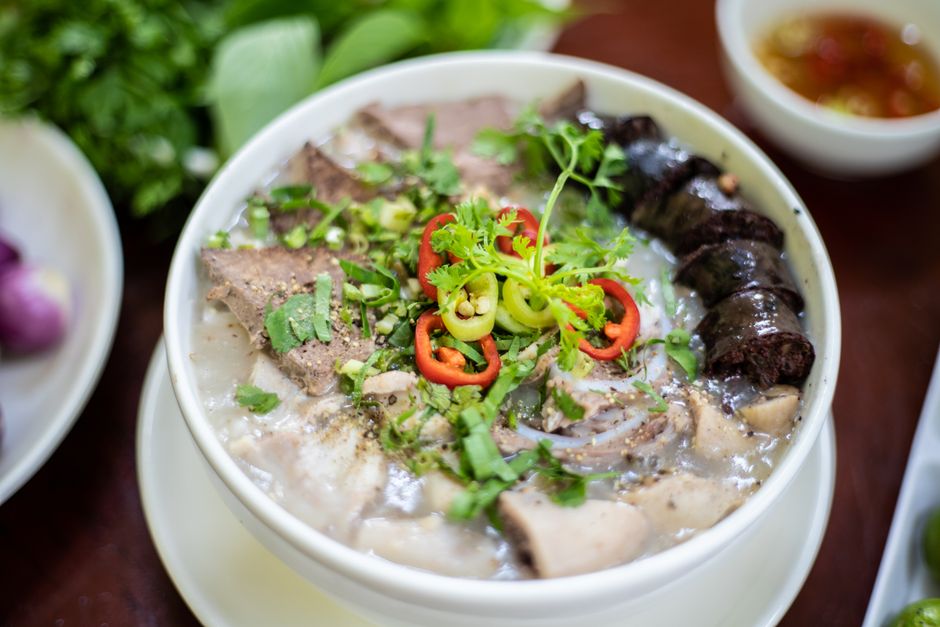
Bun bo Hue is the center’s answer to pho. A proper bowl costs 35,000-50,000 VND ($1.40-$2.00). The broth simmers with lemongrass, shrimp paste, and beef shank for 12+ hours. It arrives with thick round noodles, congealed pig blood cubes, and a punch of chili oil. If you only know pho, this will reset your expectations.
South: Saigon and the Mekong Delta
Southern food is sweeter, bolder, and influenced by Cambodian and Chinese cooking. Coconut milk appears regularly. Fresh herbs come by the basketful. The street food scene in Saigon is the most aggressive and diverse in the country.
Hu tieu is the southern soup to know. It’s a pork-and-seafood broth with clear glass noodles, often served dry with soup on the side. A bowl at Hu Tieu Nam Vang in District 5 runs about 60,000 VND ($2.40).
Dish-by-Dish: What to Order and Where
Here’s the breakdown of the seven dishes that matter. I’ve included specific stalls, prices, and what makes each one work.
| Dish | Region | What It Is | Price (VND) | Best Stall |
|---|---|---|---|---|
| Bun Cha | Hanoi | Grilled pork + cold vermicelli + fish sauce dip | 40,000-50,000 | Bun Cha Huong Lien, 24 Le Van Huu |
| Bun Bo Hue | Hue | Spicy beef and lemongrass soup with thick noodles | 35,000-50,000 | Bun Bo Hue O Phung, 14 Nguyen Cong Tru |
| Cao Lau | Hoi An | Pork and noodle bowl with local water, no broth | 30,000-45,000 | Cao Lau Ba Be, 19 Tran Phu |
| Mi Quang | Quang Nam | Turmeric noodles, shrimp, pork, minimal broth | 30,000-40,000 | Mi Quang Ba Mua, 19-21 Phan Chau Trinh, Da Nang |
| Banh Xeo | South/Central | Crispy turmeric crepe with pork, shrimp, bean sprouts | 25,000-50,000 | Banh Xeo 46A, 46A Dinh Cong Trang, Saigon |
| Hu Tieu | Saigon/Mekong | Pork and seafood glass noodle soup, often dry | 50,000-70,000 | Hu Tieu Nam Vang Thanh Xuan, 62 Ton That Thiep |
| Com Tam | Saigon | Broken rice with grilled pork chop, egg, pickles | 35,000-60,000 | Com Tam Ba Ghien, 84 Dang Van Ngu |
These prices are current as of early 2026. Street stalls and local restaurants only. Hotel versions of these dishes run 2-3x higher and usually taste worse.
Hoi An’s Cao Lau: The Dish You Cannot Recreate at Home
Cao lau is the most geographically locked dish in Vietnam. The noodles require water from the Ba Le well in Hoi An, which has specific mineral content from the Cham Islands’ limestone. Chefs soak the noodles in lye made from wood ash, then wash them in that specific water. The result is a chewy, slightly alkaline noodle that no other region can replicate.
The bowl itself is simple: thick noodles, sliced char siu pork, pork cracklings, fresh herbs, and a small amount of smoky broth. No soup. It’s a dry noodle dish. The magic is in the texture.
You’ll see “Cao Lau” on menus in Hanoi and Saigon. Skip it. The noodles are wrong. The water is wrong. Eat it in Hoi An or don’t eat it at all.
My pick for the best bowl is Cao Lau Ba Be at 19 Tran Phu. The stall has operated for three generations. A bowl costs 35,000 VND ($1.40). Go before 10 AM—they sell out by noon most days.
Banh Xeo Is Not a Vietnamese Crepe
Calling banh xeo a crepe is like calling a taco a sandwich. It’s technically adjacent but misses the point entirely. Banh xeo is a crispy rice flour pancake folded over pork belly, shrimp, bean sprouts, and mung beans. The name comes from the sizzling sound the batter makes when it hits the hot pan—”xeo” means sizzle.
The correct way to eat it: cut a piece of the crispy pancake, wrap it in mustard leaf or lettuce with fresh herbs, dip in nuoc cham. Never eat it with a fork alone. The wrap is not optional.
In Saigon, Banh Xeo 46A is the standard-bearer. Anthony Bourdain filmed here. The banh xeo costs 50,000 VND ($2.00). It’s larger than your face and arrives blisteringly hot. In Hoi An, the version uses smaller pans and adds turmeric more aggressively, making the crepe almost orange.
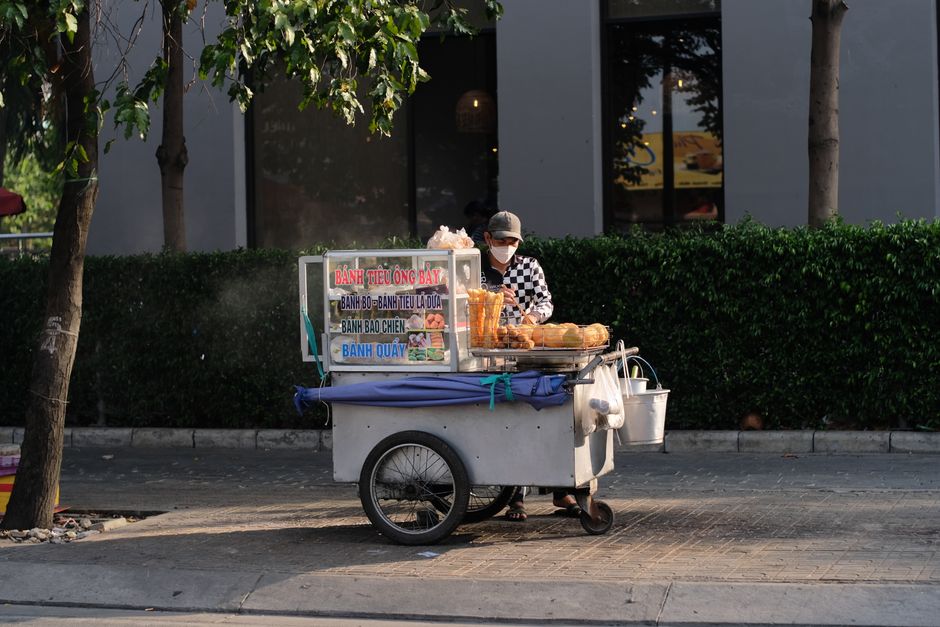
One failure mode to avoid: order banh xeo at a tourist restaurant where it sits under a heat lamp. The crispiness dies in 90 seconds. You want a stall where you hear the batter hit the pan after you order.
Street Food Safety: The Real Rules
Most food safety advice for Vietnam is useless. “Eat where locals eat” is not a strategy—locals get sick too, they just don’t tell you about it. The actual rules are simpler.
- Eat at high-turnover stalls. If a stall is packed at 7 PM and empty at 8 PM, the food has been sitting. Packed continuously means fresh ingredients cycling through constantly.
- Look for ice with a hole. Factory ice in Vietnam comes in large blocks with a hole through the center. Street ice is chipped from a larger block. If you see ice cubes with no hole, they may have been made with tap water.
- Fresh herbs are your biggest risk. Raw greens washed in tap water carry more pathogens than the cooked meat. Eat herbs at busy stalls. Skip the herb plate at empty restaurants.
- Fish sauce is safe. The salt content and fermentation kill most pathogens. The bottle on the table is not your enemy.
- Carry azithromycin. Pharmacies in Vietnam sell it over the counter. A 3-pack of 500mg costs about 80,000 VND ($3.20). If you get hit with food poisoning, take one dose. Don’t wait it out.
I ate street food daily for six weeks. I got sick once—from a hotel breakfast buffet in Da Nang, not from a street stall. The highest-risk food in Vietnam is lukewarm hotel food that’s been sitting under heat lamps since 6 AM.
What to Skip: The Tourist Trap Dishes
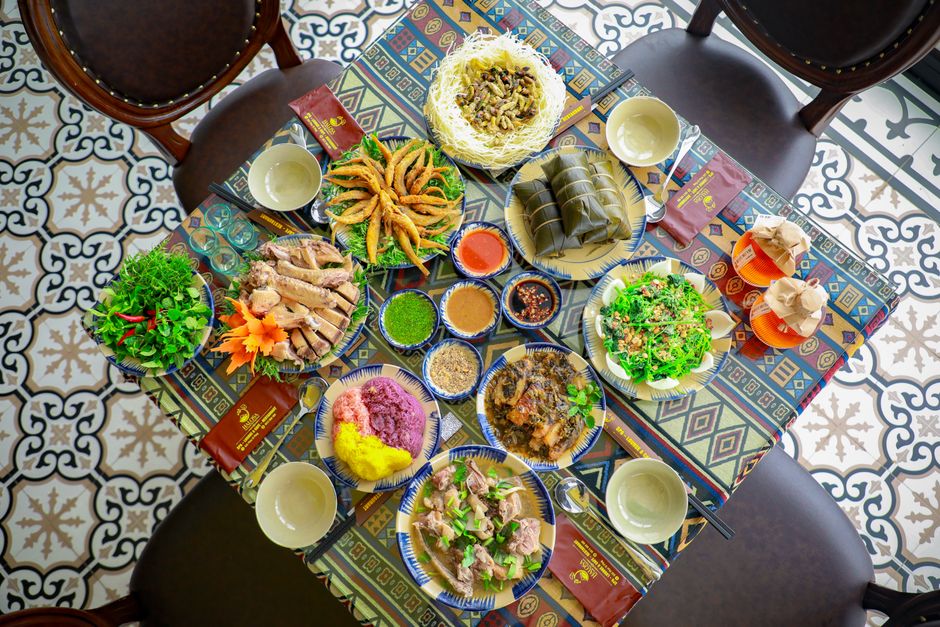
Some Vietnamese dishes are famous abroad but disappointing in country. Others are local favorites that tourists ruin by ordering wrong.
Pho in Hoi An is a tourist dish. Hoi An is cao lau country. The pho there is made for foreigners and priced accordingly. Eat cao lau, mi quang, or com ga (chicken rice). Skip pho entirely in Hoi An.
Banh mi in Hanoi is average. The best banh mi is in Saigon (Banh Mi Huynh Hoa, 26 Le Thi Rieng, 68,000 VND for a massive sandwich) and Hoi An (Banh Mi Phuong, 2B Phan Chau Trinh). Hanoi has good banh mi, but it’s not the city’s strength. Order bun cha instead.
Anything “Vietnamese” at a hotel breakfast buffet. The pho has been sitting for two hours. The banh mi bread is stale. The spring rolls are refrigerated. Eat breakfast on the street.
Egg coffee at Hanoi’s most famous cafe. Cafe Giang invented egg coffee in 1946. It’s now a tourist conveyor belt. The egg coffee is still good, but you’ll wait 30 minutes and pay 50,000 VND. Cafe Dinh at 13 Dinh Tien Hoang serves a better version for 35,000 VND with no line and a lake view.
The pattern: when a dish becomes famous on Instagram, the quality drops and the price rises. The best food in Vietnam is at stalls with no social media presence, no English menu, and a line of locals at 11 AM.
Back to the opening question: pho is a fine introduction, but it’s the training wheels of Vietnamese food. Take them off. Order bun bo hue in Hue, cao lau in Hoi An, banh xeo in Saigon, and bun cha in Hanoi. That’s the actual cuisine. That’s what Vietnamese people eat when nobody’s watching.