 Thomas Lucas
You’ve booked the flight to Kochi. Now you’re staring at a map of Kerala with 47 tabs open, every blog saying something different. One says skip Munnar. Another says Munnar is the whole point. The truth is that most Kerala itineraries fail because they try to cram too much into too little time and end up spending half the trip in a car.
This is the route I’d give a friend who has 10 days, wants to actually see Kerala, and doesn’t want to spend ₹15,000 on private taxis. It works. I’ve tested the bus connections and the homestay prices listed here.
The Route at a Glance: Kochi → Munnar → Alleppey → Varkala
Forget the north-south full-state sprint. You’ll burn two full days just sitting in traffic on NH66. Instead, pick a geographic cluster and go deep. This route covers four distinct Keralas: colonial port town, high-altitude tea country, backwater villages, and cliffside beach. Total distance: roughly 400 km. That’s manageable in 10 days without feeling like a delivery driver.
| Day | Location | Travel Time | Stay | Approx. Cost (INR) |
|---|---|---|---|---|
| 1-2 | Fort Kochi | — | Homestay near Princess Street | 1,800/night |
| 3-5 | Munnar | 4.5 hrs by bus | Tea valley homestay | 1,500/night |
| 6-7 | Alleppey (Alappuzha) | 5 hrs by bus | Homestay on backwater canal | 2,200/night |
| 8-10 | Varkala | 3.5 hrs by train | Cliff-top guesthouse | 1,600/night |
That’s roughly ₹18,000 total for accommodation if you’re solo. Less if you split rooms. Add ₹6,000-8,000 for transport and you’ve got a realistic budget of ₹25,000-30,000 for 10 days excluding flights. Not shoestring, but nowhere near the ₹60,000+ quotes travel agencies throw at you.
Days 1-2: Fort Kochi Without the Instagram Crowds
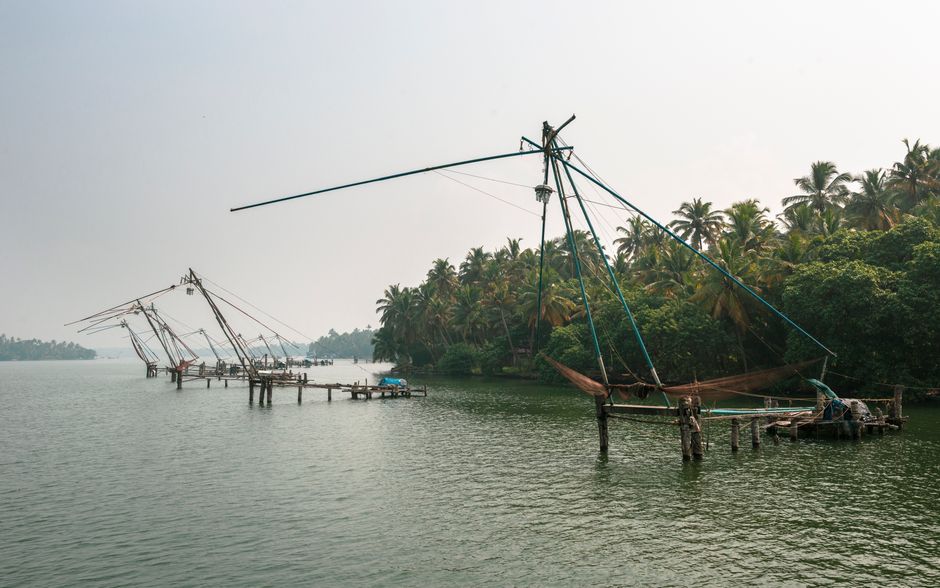
Most people treat Kochi as a transit hub and miss the best part. Fort Kochi is where Kerala’s trade history lives. Portuguese churches, Dutch cemeteries, Chinese fishing nets, Jewish synagogues. You can walk the whole thing in an afternoon.
Where to stay
Skip the big hotels on the main road. Look for homestays on Burgher Street or Rose Street. Koder House is a restored Jewish heritage home at ₹2,500/night if you want something special. Happy Camper Hostel has dorm beds at ₹600 if you’re watching cash. Both are 5 minutes from the water.
What to actually do
- Walk to the Chinese fishing nets at 6:30 AM. The light is good and the fish sellers are setting up. You can buy fresh seer fish and have one of the shacks grill it for you for about ₹150.
- Visit the Paradesi Synagogue in Mattancherry (₹5 entry). It’s 450 years old and has hand-painted Chinese tiles on the floor. Closed Fridays and Saturdays.
- Eat at Dal Roti on Lily Street. The Malabar parotta with beef fry is ₹180 and feeds two.
Mistake to avoid
Do not book a “Kochi city tour” from a rickshaw driver. They’ll take you to three shops where they get commission and one actual sight. Walk or take the ferry to Vypeen Island instead. The ferry costs ₹6 and gives you a better view of the harbor than any boat tour.
Days 3-5: Munnar Without the Private Taxi
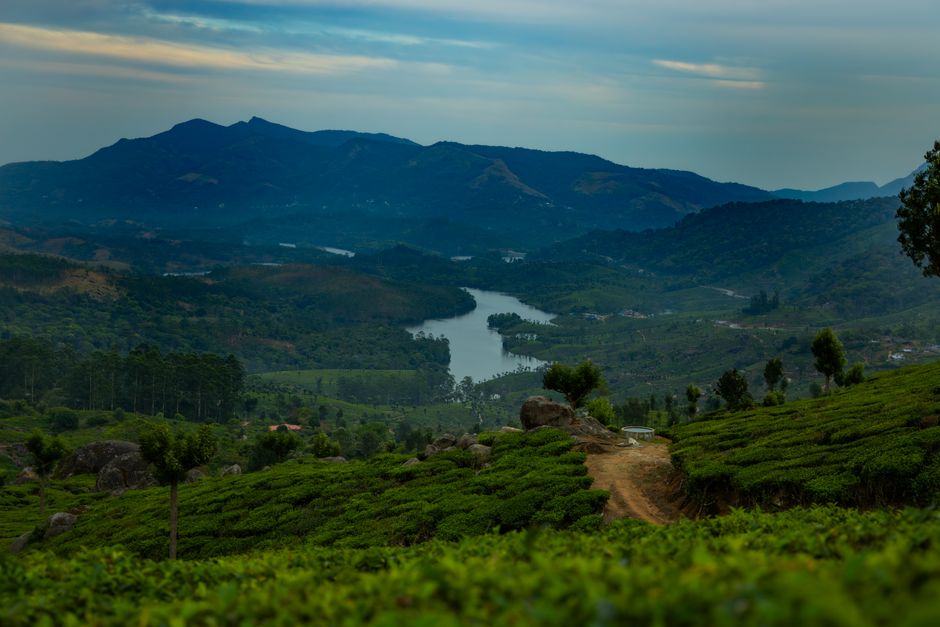
Here’s the thing about Munnar: the town itself is ugly. It’s a strip of concrete shops and traffic. The magic is 10 km outside town in the tea valleys. So don’t stay in Munnar town. Stay in a homestay in Chithirapuram or Letchmi Estate area.
Getting there
The KSRTC bus from Ernakulam to Munnar leaves every 30 minutes from the main bus stand. It costs ₹150 and takes 4.5 hours. Sit on the right side for the last hour — that’s where the valley views open up. Private taxis charge ₹3,500-4,500 for the same route. The bus is not a downgrade. It’s the same road.
What to do
- Tea plantation walk at Kolukkumalai. This is the highest tea estate in the world at 7,900 feet. The jeep ride up is rough (₹1,500 per jeep, shared by 6 people). Do the 4:30 AM sunrise trip. Yes, it’s early. It’s also the clearest view you’ll get before clouds roll in by 9 AM.
- Skip the Tea Museum. It’s a 20-minute room with old machines and a gift shop. Unless you specifically collect tea history, it’s not worth the ₹125 entry.
- Eravikulam National Park (₹125 entry, ₹335 for foreigners) is worth it only if you go at opening time. The Nilgiri tahr are most active before 10 AM. After that, you’re paying to walk on a paved path in the sun.
Where to eat
Rapsy Restaurant in Munnar town is the one place worth braving the traffic for. The appam with egg curry is ₹80. The owner, Rapsy, has been running it for 30 years and still takes orders himself. Get the banana fritters. Trust me.
Days 6-7: The Backwaters Question — Houseboat or Homestay?
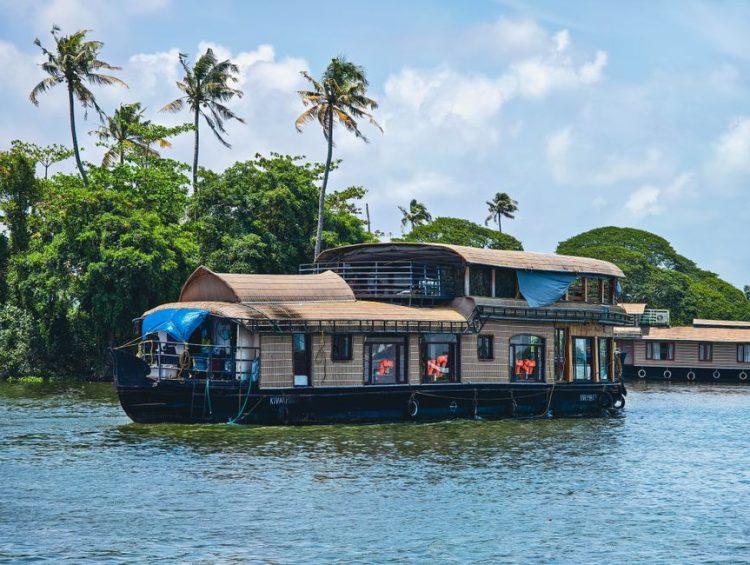
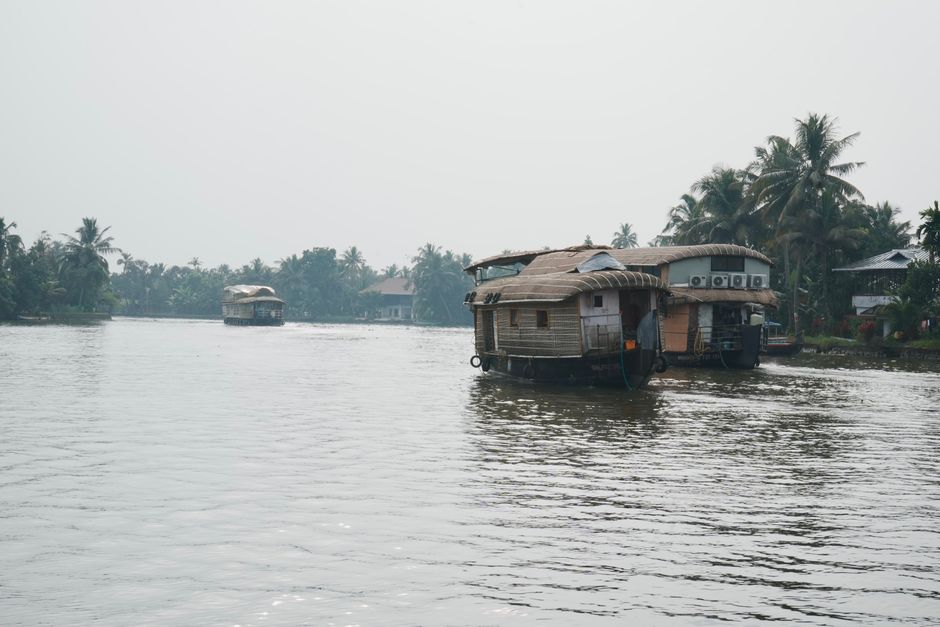
This is where most Kerala itineraries go wrong. The default advice is “book a houseboat in Alleppey.” But a full overnight houseboat costs ₹8,000-15,000 depending on season. You get a bedroom on a boat, a cook, and a route through canals that are increasingly crowded with other houseboats. In peak season, you’ll be in a line of 40 boats on the main channel. That’s not serenity. That’s a floating traffic jam.
Here’s my actual recommendation: stay in a canal-side homestay and take a 4-hour shikara (small canoe) tour instead.
A shikara fits 4 people, can go into narrow canals where houseboats can’t, and costs ₹1,500-2,000 for a half day. You see the same palm-lined waterways, the same village life, the same kingfishers. But you’re not stuck on a boat overnight with a generator humming and no escape.
Specific homestay pick
Emerald Isle Heritage Villa on the Punnamada backwaters has rooms at ₹2,500/night. It’s a 150-year-old farmhouse. The family cooks Kerala meals for ₹300 per person. You can kayak from their dock for free. This is what people imagine when they book a houseboat but rarely get.
When a houseboat DOES make sense
If you’re a family of 4+ or traveling with older parents who can’t walk much, a houseboat is easier. Book one that starts from Pallathuruthy or Kainakary instead of the main Alleppey jetty. Those routes are quieter. Ask the operator: “Does your route go through Vembanad Lake or only the Punnamada canal?” If they say only Punnamada, find another operator.
Days 8-10: Varkala for the Cliff, Not the Beach
Varkala is the only place in Kerala where the cliffs run right along the sea. You sit at a café 50 feet above the water, watch the sunset, and walk down to the beach when you want to swim. It’s better than Goa for this specific experience.
Getting there from Alleppey
Take the train from Alappuzha to Varkala. It’s 2.5-3.5 hours depending on the train. Second AC costs ₹400-500. Book on IRCTC or use the Confirmtkt app. Do not take a taxi — it’s ₹4,000 and the train is faster.
Where to stay and eat
- Clafouti Beach Resort is right on the North Cliff. Rooms at ₹2,000/night in shoulder season. The attached café does a seafood thali for ₹350 that’s better than most restaurants charging double.
- True Thomas on the cliff does a Kerala-style beef fry that’s been on the menu for 15 years. ₹220. Get it with parotta.
- For coffee, Café del Mar opens at 7 AM and has the best view on the cliff. A flat white is ₹180. Expensive by Kerala standards, worth it once.
The failure mode here
Varkala in December-January is packed. Prices double. The cliff path gets crowded enough that you’re shoulder-to-shoulder at sunset. If you’re going in peak season, come for 2 nights max and spend the extra days in Kochi or Munnar. If you’re there October-November or February-March, it’s a different place entirely.
Transport Reality Check: What Actually Works in Kerala
Kerala has the best public transport network in India. Full stop. You don’t need private taxis for this route. Here’s what works:
- KSRTC buses: The state-run buses are cheap and frequent. Kochi to Munnar: ₹150. Munnar to Alleppey: ₹180 (change at Ernakulam). Use the KSRTC app or just show up — they leave every 30-60 minutes on these routes.
- Trains: For the Alleppey to Varkala leg, train is the clear winner. Book 2-3 days ahead on IRCTC.
- Auto-rickshaws: Always insist on the meter. In Kochi and Munnar, drivers will quote 2-3x the meter rate. If they refuse the meter, walk to the next auto. There’s always another one.
The one place you might want a private car is Munnar to the tea estates. The local buses don’t go to Kolukkumalai or the smaller viewpoints. A half-day taxi in Munnar costs ₹2,000-2,500. Share it with other travelers from your homestay.
What I’d Change If You Have 7 Days Instead of 10
Cut Varkala. Do Kochi (2 days) → Munnar (3 days) → Alleppey (2 days). Fly out of Kochi. Varkala is wonderful but it’s the most expendable if you’re short on time. The backwaters and the tea country are the two things Kerala does better than anywhere else in India. The beach is nice, but it’s still just a beach.
If you have 14 days, add Wayanad in the north. The drive from Munnar to Wayanad is a full day, but the coffee plantations and the Edakkal Caves are worth it. Skip Thekkady. Periyar is overrated unless you’re specifically doing a multi-day trek. The boat ride on the lake is a 90-minute exercise in seeing other tourists photograph deer from 300 meters away.
You started with 47 tabs open and no idea which advice to trust. Here’s the resolution: pick this route, book the homestays in Chithirapuram and Punnamada, take the KSRTC bus, and skip the houseboat. You’ll see more of actual Kerala in 10 days than most people do in three weeks of over-planned, over-taxied travel.