 Thomas Lucas
 In 2026, the average hostel dorm bed in Amsterdam hit €48. A kebab in central Paris crossed €11. The old advice—”just stay in hostels and eat street food”—is dead. You need a different playbook.
This guide covers five countries: Belgium, France, Germany, Ireland, and the Netherlands. It shows exactly how to move through them for under $50 (about €46) per day in 2026. No vague tips. Real prices, real routes, real tradeoffs.
The $50 Daily Budget: Exact Numbers
Here’s the breakdown that actually works in 2026. It assumes you’re traveling solo, staying in dorms, and cooking one meal a day.
| Category | Daily Amount (EUR) | Daily Amount (USD) | Notes |
|---|---|---|---|
| Hostel dorm bed | €22–28 | $24–30 | Book 3+ weeks ahead; avoid city centers |
| Food | €12–15 | $13–16 | One grocery meal, one street meal, one coffee |
| Transport | €5–8 | $5.50–8.75 | Walk + occasional bus/tram |
| Attractions | €0–5 | $0–5.50 | Free walking tours, parks, churches |
| Buffer | €3 | $3.30 | SIM data, laundry, unexpected |
| Total | €42–49 | $46–53 | Stay under €46 to hit $50 |
Three things kill this budget fast: booking hostels last-minute in summer, eating every meal out, and taking taxis. Avoid those three and you’re fine.
The single most important rule: your city choice matters more than your spending discipline. You can be frugal in Amsterdam and still spend €70. You can relax in Leipzig and spend €35. The route is the budget.
Pick the Right Cities or Lose Before You Start
Paris, Amsterdam, Dublin, and Brussels will eat your $50 before lunch. You need second-tier cities with first-tier experiences. My picks for 2026:
- Germany: Leipzig instead of Munich. Dorm beds at the Five Elements Hostel run €19–24. The Spinnerei art complex is free to wander. Tram day pass: €8.20.
- France: Lille instead of Paris. Dorm beds €22–26 at Gastama Hostel. The old town is walkable. A baguette sandwich costs €4.50. Paris is a 1-hour train away if you want a day trip.
- Netherlands: Utrecht instead of Amsterdam. Stay at BUNK Utrecht for €26–30. The canals are as pretty as Amsterdam’s, minus the crowds. Amsterdam is 27 minutes by train for €9.20.
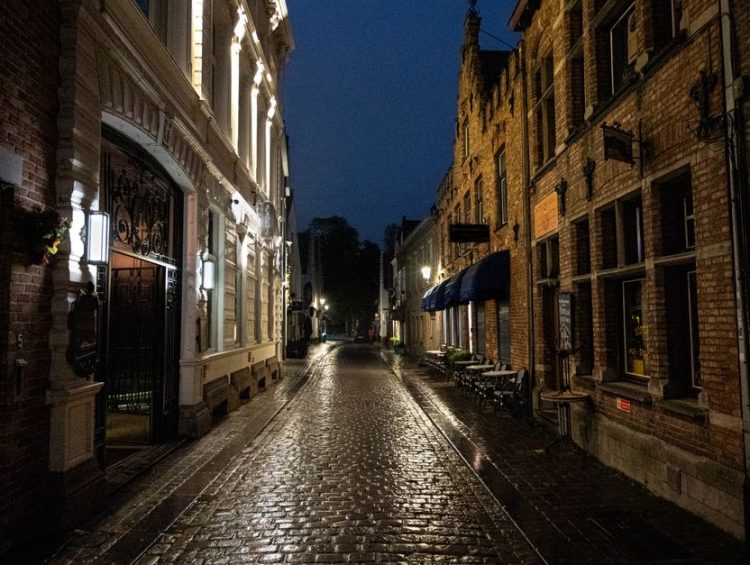
- Belgium: Ghent instead of Bruges. Hostel Uppelink has beds for €24–28. The Gravensteen castle exterior and canal walks cost nothing. Bruges day trip by train: €7.60.
- Ireland: Galway instead of Dublin. The Kinlay Hostel runs €25–30. Cliffs of Moher day trip from Galway is cheaper than from Dublin, and the city has live music in pubs you can enjoy with one €5 pint.
The pattern: cities 30–60 minutes from the famous one, with dorm beds under €30 and walkable centers. You still see the big sights. You just sleep cheaper.
Trains vs. Buses: The 2026 Reality
FlixBus still wins on price. A Lille to Ghent bus costs €6.99. The same trip by train is €14. But buses add time and drop you at edge-of-town stations. Trains put you in the center.
My rule: under 3 hours, take the bus. Over 3 hours, check the train. The Eurail Pass is rarely worth it for this route. Individual tickets booked 2–4 weeks ahead beat pass prices on these short hops.
One exception: the Lille to Paris TGV. Book on SNCF Connect 3 weeks out and you can find €19 fares. That’s cheaper than the bus when you factor in time.
For Germany, the Deutschlandticket at €58 for a full month of regional trains is the single best transport deal in Europe. It covers Leipzig trams, regional trains to Berlin, and everything except high-speed ICE. If your route spends 4+ days in Germany, buy it.
Food: The €12 Rule
You will not eat in restaurants. That’s not a hardship—it’s the strategy.
Here’s the daily food plan that averages €12–15 across these five countries:
- Breakfast: Hostel breakfast if included. If not, a bakery pastry and coffee: €3. In France, a croissant and espresso at a stand-up bar in Lille costs €2.80.
- Lunch: Supermarket. In Germany, a Rewe or Lidl sandwich is €2.50. Add fruit and a yogurt: €1.50. Total under €5.
- Dinner: One street food or cheap eat. In Ghent, frites with sauce from a frituur: €4. In Galway, a chipper fish and chips: €7. In Leipzig, a döner kebab: €5.50.
Cook one meal every other day if your hostel has a kitchen. Pasta with jarred sauce and vegetables costs €3 per portion. This is where you save the money that lets you have a beer in a pub without guilt.
In Ireland, food prices run 20–30% higher than continental Europe. A grocery lunch in Galway costs €6–7, not €4. Adjust by cooking more there. In Germany, food is the cheapest of the five. Eat bigger there.
Attractions: The Free Walking Tour Economy
Every city on this route has free walking tours. They run on tips. Pay €5–10. You get 2.5 hours of history, orientation, and a local’s recommendations. That’s cheaper than any museum audio guide.
For paid sights, pick one per city. In Ghent, skip the €27 Gravensteen interior and walk the outside. In Leipzig, the Stasi Museum is €10 and worth it. In Utrecht, climb the Dom Tower for €12.50—the view justifies the price. In Lille, the Palais des Beaux-Arts is €7. In Galway, spend your money on a Cliffs of Moher tour (€25–30) and skip everything else paid.
Churches are free. Parks are free. Canal walks are free. The best experiences on this route—the Graslei in Ghent at sunset, the Utrecht canals at 7am, the Spinnerei in Leipzig—cost nothing.
Here’s the failure mode: booking too many paid attractions in advance. You feel committed, you show up tired, you don’t enjoy it. Pick one per city. Max.
Sleeping: Hostel Strategy That Actually Works in 2026
Hostelworld still has the best inventory. But book direct when you can. Places like BUNK Utrecht and The Kinlay in Galway offer direct-booking discounts of 10–15%.
Book 3–4 weeks ahead for summer 2026. Dorm prices in Utrecht jump from €26 to €45 in July if you book the same week. In Leipzig, the swing is smaller—€19 to €28—but summer weekends still sell out.
What to look for: a hostel with a kitchen. This is non-negotiable. The Five Elements in Leipzig has a full kitchen and a Lidl 300 meters away. That combination saves you €8–10 per day. A hostel without a kitchen forces restaurant meals.
Earplugs and a sleep mask cost €10 total. They are the best travel investment you will make. Dorms are noisy. Accept it and prepare.
One alternative: in Germany and Belgium, private rooms in guesthouses sometimes cost €35–40. If you’re traveling with a partner, two dorm beds at €25 each equals €50—a private room is cheaper. Always check private room prices before defaulting to two dorm beds.
When NOT to Do This
This route fails in three situations.
First, if you’re traveling in July or August with less than 3 weeks’ notice. Dorm beds in Utrecht and Galway hit €50–60. You’ll blow the budget on sleep alone. Go to Eastern Europe instead—Krakow, Budapest, Brasov—where prices hold even in peak season.
Second, if you have mobility issues that make walking 10–15 km per day impossible. This budget assumes you walk a lot. Buses and trams add up. If walking is hard, add €10–15 per day for transport and accept a higher budget.
Third, if you’re traveling with kids. Family rooms cost more than dorms. Food costs more. The math breaks. A family of four cannot do Europe on $50 per person per day in these countries. Aim for $75–90 per person instead.
The budget works for solo travelers and pairs under 35 who can handle dorms and walking. Outside that profile, adjust expectations.
Single most important takeaway: the city you choose determines your daily spend more than any other decision—pick Leipzig, Lille, Utrecht, Ghent, and Galway, and $50 a day works without suffering.