 Thomas Lucas
Paris has 20 numbered arrondissements, yet one of the best afternoons in the city can cost nothing and pass through three very different neighbourhoods before the museum queues have moved ten metres. The trick is to walk where Paris feels lived-in: along canals, through market streets, beside old village lanes, and up parks with city views. These six routes avoid the main ticket bottlenecks while still giving you architecture, history, food, and a strong sense of place.
Which Paris neighbourhood walk should you choose?
Start with the route that matches your energy, not the attraction you feel obliged to visit. Every option below stays mostly outdoors and works without a timed entry, but the walking surface and crowd pattern vary sharply.
A quick route comparison
| Walk | Distance | Walking time | Best for | Crowd risk |
|---|---|---|---|---|
| Canal Saint-Martin to Belleville | 4.5 km | 90 minutes | Canal views, cafés, street art | Low on side streets |
| Latin Quarter to Mouffetard | 3.2 km | 75 minutes | Roman history and food streets | Medium near Notre-Dame |
| Montmartre north and east | 4 km | 2 hours | Village lanes without the Sacré-Coeur crush | Low after Lamarck |
| Buttes-Chaumont to Mouzaïa | 3.8 km | 90 minutes | Park scenery and quiet houses | Low |
| Passy to Auteuil | 4.5 km | 2 hours | Art Nouveau and residential Paris | Very low |
| Oberkampf to Père-Lachaise | 3.5 km | 90 minutes | Independent shops and cemetery paths | Low to medium |
The clear winner for a first attempt
Choose Buttes-Chaumont to Mouzaïa if you want the strongest contrast with the usual Paris checklist. You get a dramatic park, a lake, a temple viewpoint, steep paths, and a residential quarter of tiny detached houses, all within a short distance of the city centre. Choose Passy to Auteuil instead if stairs are a problem. It is flatter, quieter, and more architectural, though it has fewer classic postcard scenes.
Why Buttes-Chaumont is the best escape from central crowds
Where should you begin?
Begin at the southern entrance to Parc des Buttes-Chaumont and walk uphill toward the lake rather than following the first broad path, because the smaller paths reveal the park’s cliffs, bridges, and planted slopes faster than the busy perimeter route, then cross near the central island for the most memorable view and continue toward the park’s quieter northern edge.
What makes the route feel different?
The park was designed around artificial cliffs, a grotto, waterfalls, and a high viewpoint, so it feels less like a formal garden and more like a landscape drama inside a dense city, while the nearby streets quickly shift from open lawns to ordinary bakeries, schools, apartment blocks, and the small lanes of the Mouzaïa quarter.
Who should pick this walk?
Pick it for a half-day with no major ticket, especially if you want photographs and a local neighbourhood after the park; skip it after heavy rain or for a fully accessible route because the slopes can become slippery, several paths include steps, and the park’s uneven terrain demands better shoes than the smooth pavements around the Louvre.
How to walk from Canal Saint-Martin to Belleville without wasting time
Start beside the water, then leave the obvious path
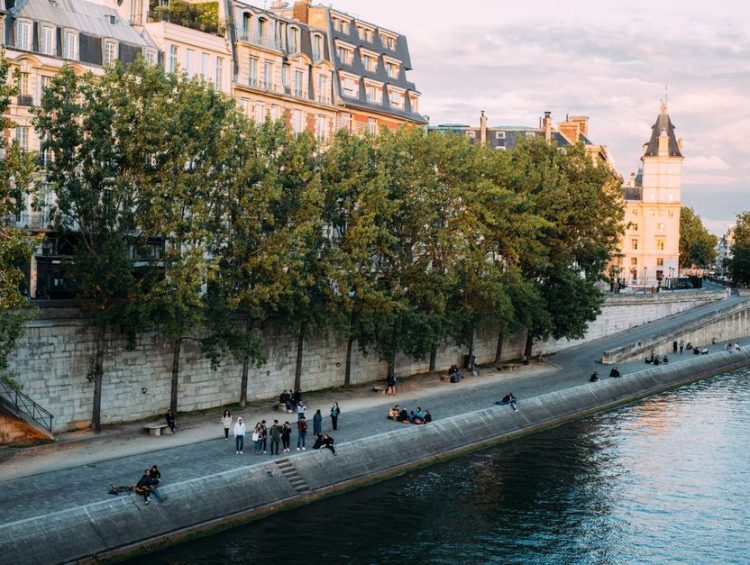
Start near the southern end of Canal Saint-Martin and follow the water north for the first stretch, where iron footbridges, tree-lined quays, and lock gates create the familiar Paris canal scene. Do not spend the whole walk beside the canal. After the first bridges, turn into the streets around rue de Marseille and rue Oberkampf, where small shops and cafés replace the picnic crowds. The best version of this route uses the canal as an opening image, not as the entire itinerary.
Use Belleville for the city view
Continue east and north toward Parc de Belleville. The park climbs a hill, so it gives you a broad city view without the packed terraces around Montmartre. The vineyard is small, but it explains why the hillside once had a rural identity before Paris expanded around it. From the upper paths, look back toward the centre, then descend through Belleville’s dense streets instead of returning to the canal. This is where the route becomes more useful than a standard sightseeing loop: you see a working district, not a stage set built around one monument.
Build in a food stop
Keep the meal flexible and choose a busy local street rather than searching for a famous address. Belleville has a long history of migration, and its restaurants, bakeries, and food shops reflect that mix. Allow thirty minutes for a casual stop, then continue toward Père-Lachaise if you still have energy. The whole walk takes about three hours with pauses, and it works best in the late morning or early evening, when the canal light is good and the narrow streets around Belleville feel active rather than empty.
How to plan a neighbourhood walk that does not collapse into a queue
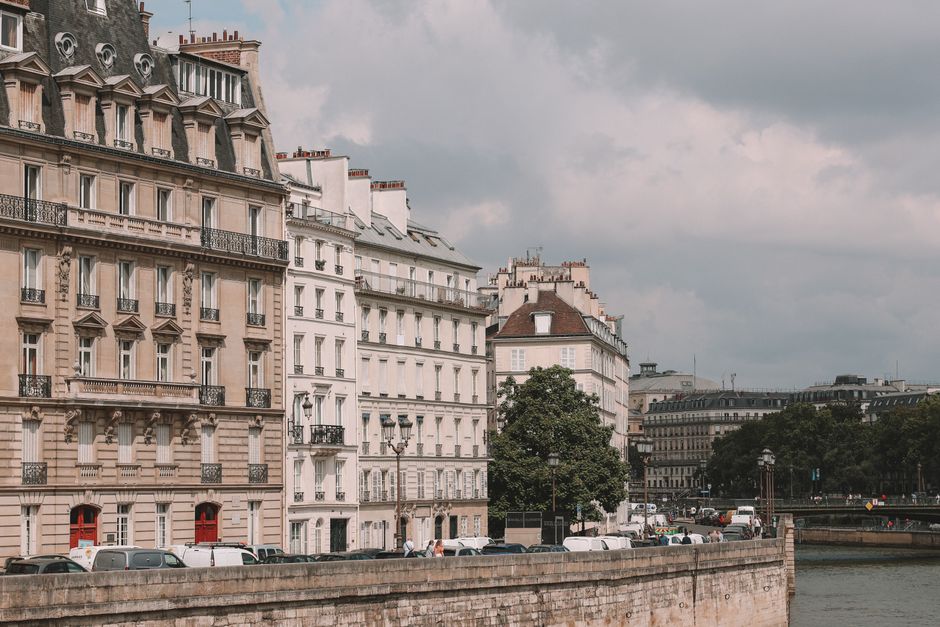
Use this simple planning sequence
- Choose one anchor, not five. Pick a canal, park, cemetery, market street, or viewpoint as the route’s one fixed destination. More anchors create backtracking and tempt you into crowded transport hubs.
- Keep the route between three and five kilometres. That distance gives you room for detours, coffee, photographs, and a wrong turn without turning the day into a fitness test.
- Start near a metro station but finish somewhere different. A point-to-point walk feels more like exploration and stops you from retracing the same pavement.
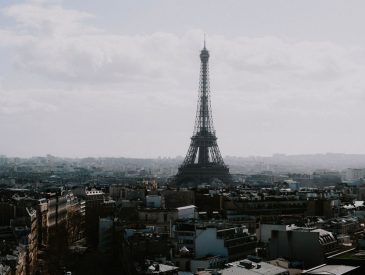
- Put the popular landmark at the edge. You can see the Eiffel Tower from Passy, the Sacré-Coeur dome from northern Montmartre, and Notre-Dame from the Latin Quarter without making the landmark your main stop.
Protect the useful parts of the day
- Leave the busiest central streets before 10:30 in the morning or after 16:00, when organised groups often fill the same narrow corridors.
- Save ten minutes for every planned detour. Paris rewards curiosity, and a route with no spare time encourages rushed decisions.
- Carry water, especially on Montmartre, Belleville, and Buttes-Chaumont, where hills make a short map distance feel longer.
- Use a downloaded map. Underground passages, large parks, and old cemetery paths can make phone reception unreliable.
- Check the day’s weather before choosing a park route. Rain changes the comfort of Buttes-Chaumont and Père-Lachaise more than it changes a stone-paved Latin Quarter walk.
The practical verdict is simple: design around walking rhythm, not landmark count. A route that ends near a café or market gives you a natural pause, while a route that ends at a famous entrance usually ends with a line.
My strongest recommendation: walk Passy to Auteuil for quiet, elegant Paris
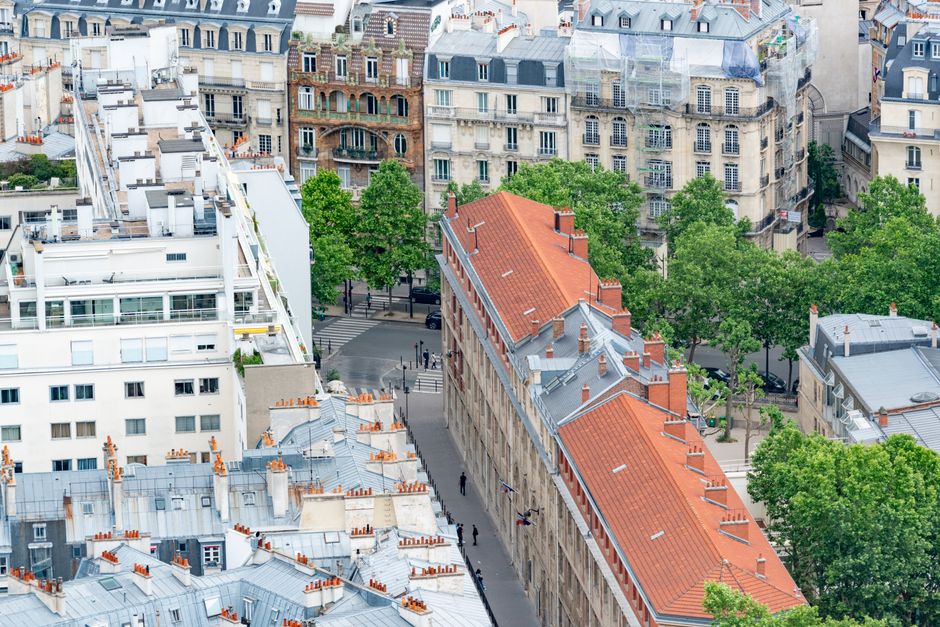
For travellers who want beauty without crowd pressure, Passy to Auteuil is the best Paris neighbourhood walk. It has no single blockbuster sight, which is precisely why it works. The route moves through residential streets, small gardens, Art Nouveau façades, former village lanes, and the Bois de Boulogne edge. You still see the Eiffel Tower from useful angles, but you do not spend an hour standing beneath it with thousands of other visitors.
Follow the architecture, not the checklist
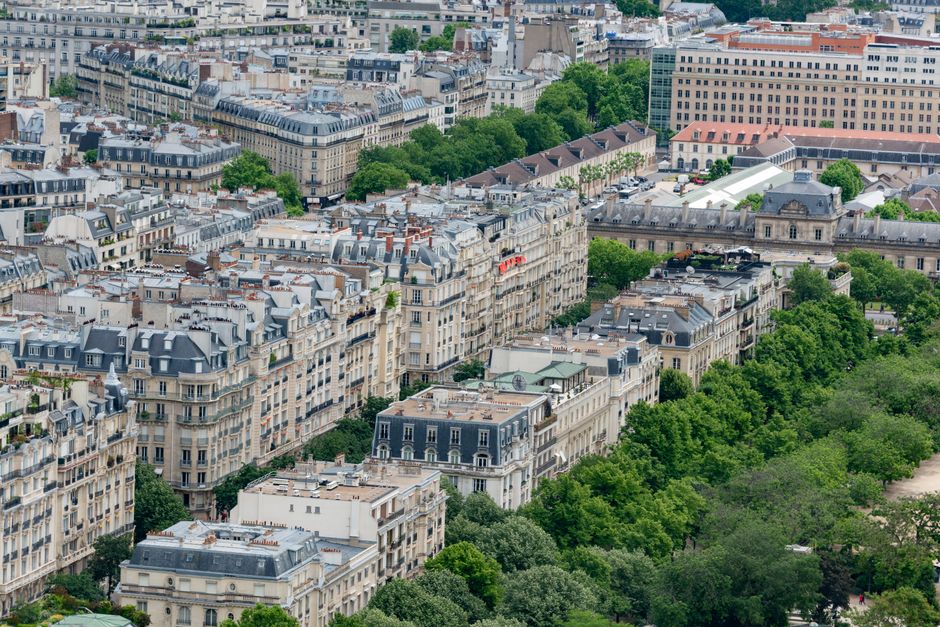
Begin around Passy and look for the narrow streets that preserve the area’s village shape. The buildings become more decorative as you move toward Auteuil, with curved balconies, ceramic details, glasswork, and pale stone façades. Rue Berton gives you one of the area’s most atmospheric lanes, while the streets around rue La Fontaine reward slow looking rather than fast navigation. Do not treat every attractive building as a named monument. The pleasure comes from the concentration of small details over several blocks.
Know when to choose another route
Skip Passy to Auteuil if your priority is medieval Paris, busy food markets, or dramatic nightlife. It can feel too polished and residential after sunset, and it offers fewer spontaneous stops than Belleville or Oberkampf. For a first visit focused on historic texture, choose the Latin Quarter to Mouffetard route instead. For a sunny afternoon with children, choose Buttes-Chaumont, where open space gives everyone more room to stop and move.
Questions travellers ask before choosing a quieter Paris route
Can I avoid the Eiffel Tower and still get a good Paris view?
Yes. Walk through Passy toward the Trocadéro side streets, or climb Parc de Belleville for a wider city panorama. Belleville gives you a less polished but more expansive view, while Passy gives you a closer glimpse of the tower between residential buildings. Neither route requires an observation-deck ticket, and both work better when you treat the landmark as part of the landscape rather than the destination.
Is the Latin Quarter still worth visiting without entering Notre-Dame?
Yes, but leave the busiest riverfront quickly. Start near the Roman-era Arènes de Lutèce, continue through rue Mouffetard, and use the side streets around rue Monge for a slower look at old façades and local shops. The route works because the neighbourhood contains layers from Roman Paris, medieval streets, student life, and modern food culture. Notre-Dame can remain a distant reference point instead of the place where your afternoon gets stuck behind barriers.
Which walk is safest from a planning point of view?
Choose Canal Saint-Martin to Belleville in daylight, with a clear exit at a metro station and a flexible meal stop. Choose Passy to Auteuil for the easiest pace and Buttes-Chaumont for the most visual reward. The common mistake is starting too late, walking until tiredness takes over, and then joining the nearest queue because it feels like the only available plan. A shorter point-to-point route with one strong neighbourhood is a better use of Paris than a long circuit built around six entrances.