
 Thomas Lucas
 You have two weeks of vacation time and you’re staring at two islands. Both have palm trees, warm water, and cheap massages. But Bali and Phuket are not interchangeable. Pick the wrong one for your travel style and you’ll spend 14 days annoyed. Pick the right one and you’ll rebook before you fly home.
I’ve spent extended time on both islands, most recently a month split between Canggu and Kata Beach in early 2026. Here’s the breakdown that actually matters: costs, crowds, beaches, food, and the invisible stuff that makes or breaks a trip.
Cost Reality Check: What You’ll Actually Spend Per Day
Let me kill the myth first: neither island is “dirt cheap” anymore. Both have tourist inflation. But the gap between them has narrowed in surprising ways.
In Bali, a private room in a guesthouse in Canggu runs 350,000–550,000 IDR per night (about €20–€32). A meal at a local warung costs 25,000–40,000 IDR (€1.50–€2.40). A Western-style brunch with good coffee: 120,000–180,000 IDR (€7–€11). Scooter rental: 80,000 IDR per day (€4.70).
In Phuket, a private room near Kata or Karon Beach runs 800–1,400 THB per night (€21–€37). A meal at a local Thai restaurant costs 60–100 THB (€1.60–€2.70). Western brunch: 250–400 THB (€6.70–€10.70). Scooter rental: 250–300 THB per day (€6.70–€8).
The difference? Maybe €3–5 per day. Not enough to decide your destination.
| Expense | Bali (Canggu area) | Phuket (Kata/Karon area) |
|---|---|---|
| Guesthouse private room | €20–€32/night | €21–€37/night |
| Local meal | €1.50–€2.40 | €1.60–€2.70 |
| Western brunch + coffee | €7–€11 | €6.70–€10.70 |
| Scooter rental/day | €4.70 | €6.70–€8 |
| 1-hour massage | €7–€10 | €8–€12 |
| Mid-range dinner for 2 | €18–€28 | €16–€26 |
Verdict: Costs are close enough that this shouldn’t be your deciding factor. If you’re on a strict backpacker budget, Bali still edges out Phuket by about 10–15% overall.
Beaches: Phuket Wins, and It’s Not Close

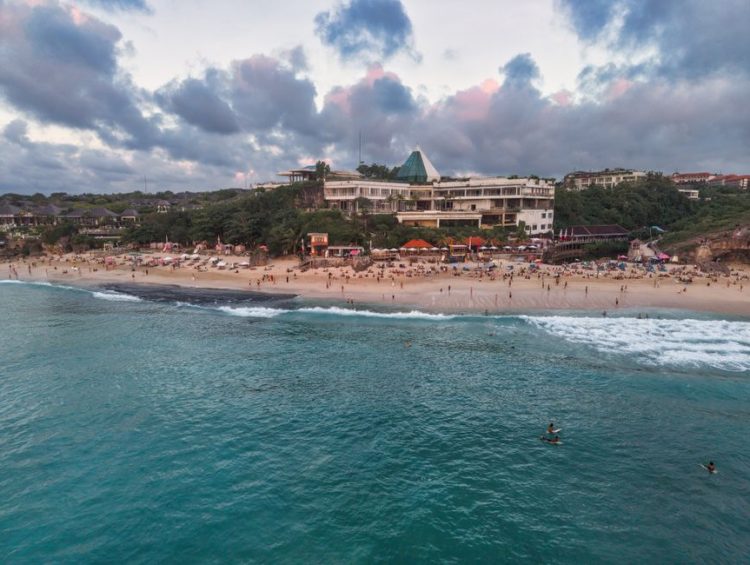
If your mental image of a tropical island is white sand and clear turquoise water, go to Phuket. Bali’s beaches are fine. Some are even beautiful. But many are dark volcanic sand, and the famous surf beaches like Canggu and Seminyak have rough water and trash issues depending on the season.
Phuket’s west coast delivers what the Instagram algorithm promised you. Kata Beach is wide, clean, and swimmable. Karon Beach stretches for 3 kilometers. Freedom Beach requires a short boat ride or steep hike but rewards you with that postcard water. Even busy Patong has better sand than most of Bali’s southern coast.
Bali’s best beaches require effort. Nusa Dua has calm water but feels sterile and resort-heavy. Uluwatu beaches like Padang Padang and Bingin are gorgeous but you’re walking down cliffs to reach them. The sand is still not as white as Phuket’s Andaman coast.
For swimming, snorkeling, and doing nothing on a towel, Phuket wins clearly. For surfing, Bali wins. That’s the tradeoff.
Digital Nomad Infrastructure: Bali Crushes Phuket
Here’s where the islands diverge hard. If you’re working remotely in 2026, Bali has the ecosystem. Phuket has pockets.
Bali’s coworking scene is mature. In Canggu alone you have Outpost (day pass 150,000 IDR / €9), Tropical Nomad (120,000 IDR / €7), and Biliq (100,000 IDR / €6). Ubud adds Hubud (now rebranded as Outpost Ubud) and Bali Bustle. These spaces have proper ergonomic chairs, meeting rooms, and fast fiber internet. The community is the product: you’ll meet 20 other remote workers on your first day.
Phuket has coworking spaces, but they’re fewer and more spread out. HOMA Phuket Town offers a solid space (day pass 300 THB / €8). La Casa Coworking in Rawai is decent. But the density isn’t there. You’ll find more retirees and vacationers than laptop workers. The nomad community exists but you have to hunt for it.
Internet speeds on both islands are good in built-up areas. Bali’s average fiber connection in Canggu: 50–100 Mbps. Phuket: similar. The difference is the community and infrastructure density.
For remote work in 2026, Bali is the clear pick. Phuket works if you already have your routine and just need a desk and decent Wi-Fi.
Getting Around: Phuket’s Transport Problem Is Real
Bali has its own chaos, but Phuket’s transport mafia is a genuine frustration. Here’s the situation.
In Bali, you rent a scooter for €4.70 per day and go anywhere. Grab and Gojek (ride-hailing apps) work everywhere except a few village roads where local taxi cartels block them. Even then, the blocks are shrinking. You have freedom.
In Phuket, Grab works in most areas but gets blocked near some beach clubs and hotel entrances. The local tuk-tuk and taxi drivers charge 3–5x the Grab price for the same route. A 10-minute ride that costs 150 THB on Grab might cost 400–500 THB with a street tuk-tuk. The drivers know tourists don’t have options in certain spots, and they exploit it.
Renting a scooter in Phuket (€6.70–€8/day) solves most of this. But the roads are busier and the drivers more aggressive than Bali. If you’re not confident on a scooter, Phuket’s transport costs will eat your budget.
Bali wins on transport freedom. Phuket wins only if you’re comfortable riding a scooter in heavy traffic.
Nightlife and Social Scene: Different Flavors
Both islands party, but the vibe is completely different.
Phuket’s nightlife is concentrated and loud. Bangla Road in Patong is a sensory assault: neon, touts, go-go bars, and drunk tourists from every continent. It’s fun for exactly one night. After that, most people retreat to beach bars in Kata or the more upscale beach clubs like Catch Beach Club on Bang Tao or Café del Mar in Kamala.
Bali’s nightlife is more spread out and varied. Canggu has beach bars like La Brisa and The Lawn that do sunset DJ sets. Seminyak has proper clubs like La Favela and Motel Mexicola. Uluwatu has cliff-top bars with views that Phuket can’t match.
For meeting people, Bali’s social scene is easier. The digital nomad and backpacker communities overlap at cafes, yoga studios, and surf spots. Phuket’s social scene skews more toward package tourists and couples. You can meet people in Phuket, but you have to work harder.
Final Verdict: Pick Based on This One Question

Ask yourself: What do I actually want to do all day?
If the answer is “sit on a beautiful beach, swim in clear water, and relax” — pick Phuket. The beaches are better, the water is calmer, and the island is easier to navigate if you stay in one area like Kata or Bang Tao.
If the answer is “surf, work remotely, meet other travelers, and explore” — pick Bali. The community is stronger, the coworking infrastructure is unmatched, and the island rewards people who move around.
For a 2026 trip, my specific recommendation: first-time Southeast Asia traveler who wants beaches and ease? Phuket. Solo traveler or remote worker who wants community and variety? Bali. Couples who want a mix? Bali’s Uluwatu and Ubud combo beats anything Phuket offers for romance.
Both islands are worth visiting. But they solve different problems. Pick the one that matches your actual travel style, not the one that looks better on someone else’s Instagram.